
Welcome once again to our agricultural space Novamulch. This time we are going to present a report on the European agricultural standards for crops currently operating in the EU.
This body of legislation regulates everything related to European agriculture and the products derived from it, as well as its impact on all the continent’s markets and its safe, sustainable, traceable and environmentally friendly impact, protecting both the farmer and the end consumer.
By 2026, these European agricultural standards for crops are still fully in force and are applied under a rigorous level of control, technical requirements and traceability, especially in relation to the use of soils, agricultural inputs and compliance with regulations that protect our ecosystem.
We will study what they consist of, how to apply them correctly and what are the benefits we obtain by being consistent with these regulations, and on the other hand, the penalties that apply when these specifications are overlooked.
We will also learn how our agricultural projects can be viable with optimal profitability in the medium and long term, adopting an ecological vision in accordance with our environmental needs.
Regulatory framework for agriculture in the European Union.
The legal framework of European agricultural standards for crops is what is known as the Common Agricultural Policy or CAP, which defines the environmental and agronomic obligations, the strategic orientation of the European agricultural model, the criteria for controls and sanctions, and the conditions for receiving aid and direct payments.
2026 enters the implementation period of the CAP 2023-2027, which signals an increased focus on sustainability and climatic factors, a reinforcement of cross-compliance, digitization of agricultural control and the integration of measurable agronomic practices.
PAC 2023-2027 does not introduce new structural obligations in 2026; however, it intensifies control mechanisms, especially in the field and technical documentation.
What does the reinforcement of conditionality consist of?
Within the European agricultural standards for crops, this point refers to the fact that if they are effectively complied with verifiable, continuous and in accordance with the environmental, agronomic and legal guidelines proposed by the Common Agricultural Policy (CAP), the aid becomes effective. Let’s study.
Conditionality in force:
How we work and maintain the soil.
What laws we comply with during the production process.
Sustainability as a minimum required obligation:
Provide minimum soil cover.
Continuous crop rotation.
Controlled irrigation systems.
Prohibition of practices that are harmful to the soil and crops.
Obligation to demonstrate and document to present it in case it is required. “If it is not documented it does not exist”, therefore, the reinforcement requires recording agricultural practices, planning consistency between plots, crops and recording dates.
Here we insist on keeping the crop log and the agricultural road map that we have been mentioning in our previous articles, to make it easier for us to present these records when necessary. Likewise, the agronomic decisions we make must have a technical justification.
In summary, within the European agricultural standards for crops, the reinforcement of cross-compliance means that the CAP no longer pays only for producing, but for producing in compliance with environmental and legal standards in a demonstrable and justified manner.
The practices we implement in our agricultural projects, such as reducing erosion, properly covering the soil (here Novamulch biodegradable paper mulch is essential), optimizing inputs and avoiding impacts due to the use of aggressive herbicides and non-ecological fertilizers, are strategic recommendations to obtain the aid proposed by the CAP.
It is vital to emphasize that the 2023-2027 reform of the Common Agricultural Policy (CAP) focuses specifically on sustainability, soil and water protection in all cultivation processes, the reduction of chemical inputs, and measures aimed at adapting to climate change.
Reinforced conditionality: BCAM and RLG.
Let us now analyze these two topics to make a “to do list”.
BCAM or Good Agricultural and Environmental Conditions, numbered and mandatory for all crops:
BCAM 1: Maintenance of permanent pastures.
BCAM 2: Protection of wetlands and peatlands.
BCAM 3: Prohibition of stubble burning.
BCAM 4: Protection strips on river banks.
BCAM 5: Tillage management to avoid erosion.
BCAM 6: Minimum ground cover.
BCAM 7: Crop rotation.
BCAM 8: Non-productive surfaces (biodiversity).
We add that, to facilitate compliance with GAEC 5, 6 and 7, the use of Novamulch biodegradable paper mulch is vital.
RLG or Legal Management Requirements.
This regulatory framework aims at the sustainable use of plant protection products, food safety, water protection against nitrates, public and environmental health, and animal welfare, when applicable.
Regulation (EC) 1107/2009 operates in full force and effect in 2026.
The obligations currently in effect are:
Exclusive use of authorized active substances
Mandatory application of Integrated Pest Management (IPM)
Treatment record (digital or physical)
Priority to methods:
Preventive
Mechanics
Biologicals
Physicists
The EU maintains the 50% reduction target for chemical pesticides by 2030. Although the SUR proposal was revised, Member States tighten controls and audits.
European agricultural standards for crops: Legal framework on fertilization, nitrates and water protection.
Next, let’s analyze the content of the Fertilization regulation:
Nitrogen limits per hectare.
Mandatory subscriber plans.
Prohibition of fertilization during sensitive periods.
Groundwater protection.
Nitrates Directive (in force in 2026):
Maximum nitrogen limits per hectare.
Mandatory subscriber plans.
Prohibition of fertilization during sensitive periods.
Reinforced control in vulnerable areas.
European agricultural standards for crops focused on quality, food safety and traceability.
Regulated by the EU Hygiene Package:
Complete traceability of the crop, from planting to marketing.
Accurate identification of plots and crops.
Control of contaminants and residues.
Good collection and storage practices.
It also includes Maximum Residue Limits (MRLs) on agricultural commodities.
European agricultural standards for crops on environment and climate by 2026.
The strategies are still in force and active:
Farm to Fork Strategy
European Biodiversity Strategy
Main objectives:
Reduction of agricultural emissions
Soil conservation
Efficient use of water
Protection of pollinators
Key strategies:
Farm to Fork Strategy
European Biodiversity Strategy
Confirmed targets for 2030:
-50 % use of chemical pesticides
-20 % fertilizers
+25% organic surface
At this time it is required to present indicators of progress, not just commitments.
Organic production in 2026 included in the European agricultural standards for crops.
Regulated by Regulation (EU) 2018/848:
Ban on synthetic agrochemicals
Authorized natural inputs
Permitted biodegradable materials
Certification and official controls
Novamulch biodegradable paper mulch is expressly approved and recommended in certified organic agricultural production.
European agricultural standards for country-specific crops.
As we know, the Common Agricultural Policy or CAP is the general framework that defines objectives and basic standards for crops within the EU.
However, this regulation is not uniformly applied to all regions, as it must be implemented with specific criteria according to the agricultural projects, the general conditions of each area and the time of year in which it is to be planted.
This is why the practical application of this body of law or the plan in which it is enforced and its implementation is adjusted for each EU country is known as PEPAC: Strategic Plan for the Common Agricultural Policy.
Let us examine the European agricultural standards for crops in the particular case of Spain.
The CAP or Common Agricultural Policy does not apply in a generic way, and this is where the strategic plan of this common agricultural policy (PEPAC) comes in, adjusting to the agricultural reality of this country.
Thus, the implementation of this policy (PEPAC) contains these parameters:
Mediterranean climate, characterized by recurrent droughts and high temperatures.
High risk of soil erosion.
Structural water shortage.
Great diversity of crops: rainfed, irrigated, woody, horticultural.
Fragile and shallow soils in many areas.
On the other hand, we must consider the specific eco-regimes in force for 2026, in the case of Spain. Let’s see.
What are ecoregimes?
These are strategic and voluntary CAP payments; economic rewards for farmers who apply agricultural practices beneficial to the climate and the environment, beyond the minimum obligations.
This means that if the agricultural requirements are met according to the climatic and soil conditions in which it is to be cultivated, PAC assists by granting a payment per hectare, for specific environmental practices (for how it is cultivated), in order to encourage sustainable practices, reduce environmental impacts, improve soil health, favor biodiversity and accelerate the transition to an ecological agricultural practice.
The following are some examples of eco-regimes in force in Spain.
In the Spanish PEPAC, ecoregimes are grouped into large blocks. They focus on vegetative covers on woody crops, improved rotations on arable land, conservation agriculture by direct seeding, biodiversity areas and sustainable pasture management.
Each of these blocks has specific technical requirements, specific minimum periods and maintenance conditions.
They are key as they represent an important part of the CAP payment and are monitored by satellite and digital data, as well as requiring real consistency between results and demonstrable practices.
We re-emphasize the importance of implementing a “crop log”, an “agricultural road map” by which we can keep a record of our planting process from land preparation to harvesting and storage times. Submitting this record will help us to receive the support and endorsement we require for these CAP aids.
Buy Novamulch biodegradable paper here:
-
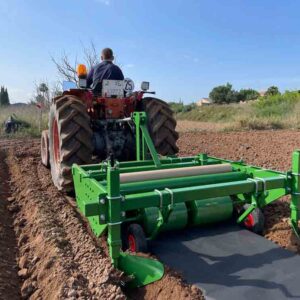
Novamulch agricultural mulching machine
-
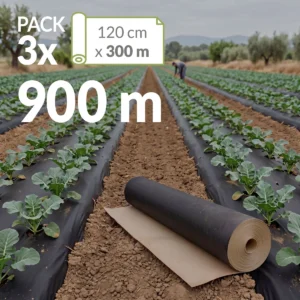
PACK of 3 rolls of Novamulch Professional paper 120 cm. x 300 m. (900 m)
299,15 € VAT included -
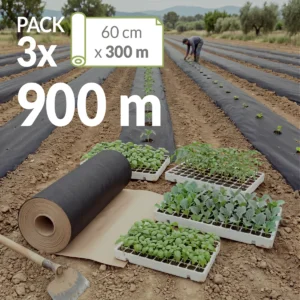
PACK of 3 rolls of Novamulch Professional paper 60 cm. x 300 m. (900 m)
149,78 € VAT included -
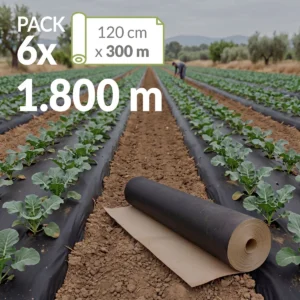
PACK of 6 rolls of Novamulch Professional paper 120 cm. x 300 m. (1.800 m)
599,20 € VAT included -
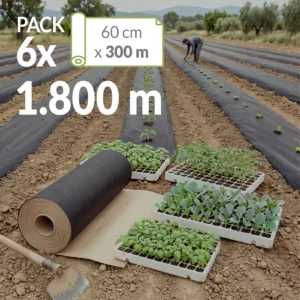
PACK of 6 rolls of Novamulch Professional paper 60 cm. x 300 m. (1.800 m)
299,15 € VAT included -
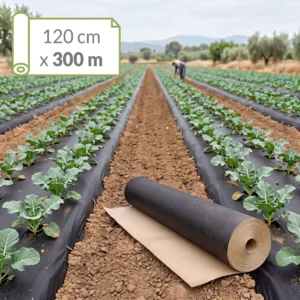
Novamulch Professional Paper 120 cm. x 300 m.
99,86 € VAT included -
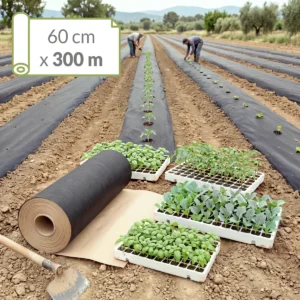
Novamulch Professional Paper 60 cm. x 300 m.
49,93 € VAT included -
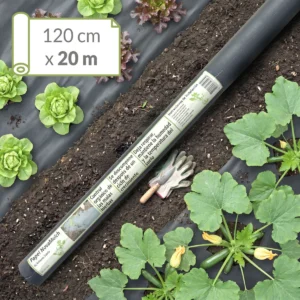
Novamulch paper 120 cm. x 20 m.
44,13 € VAT included -
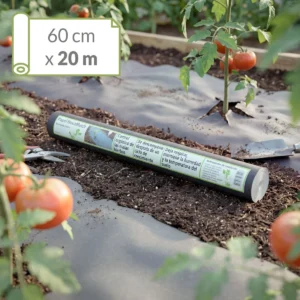
Novamulch paper 60 cm. x 20 m.
23,20 € VAT included -
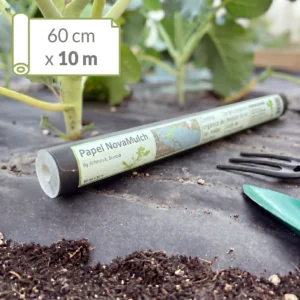
Novamulch paper 60 cm. x 10m.
15,74 € VAT included
Verified and current official sources and European agricultural standards for crops.
We share in our agricultural space Novamulch this valuable information as support material.
Common Agricultural Policy (CAP) 2023-2027
Common Agricultural Policy (CAP) – Overview and strategic plans.
European Commission:
https://agriculture.ec.europa.eu/common-agricultural-policy/cap-overview_en
(Main source for defining what the CAP is, its period of validity and its environmental and productive objectives).
CAP Strategic Plans by country (PEPAC)
European Commission:
https://agriculture.ec.europa.eu/cap-my-country/cap-strategic-plans_en
(Official framework explaining how each country applies the CAP, including Spain).
Reinforced conditionality, BCAM and RLG (Spain).
Spanish Agricultural Guarantee Fund (FEGA).
(Key reference to explain what BCAM and RLG are and how they are applied in Spain).
Practical Guide to the New CAP 2023-2027
https://www.almendrave.com/images/BLOG_2023/Guia%20PAC_2023_2027_.pdf
Phytosanitary products and integrated pest management.
Regulation (EC) 1107/2009 on plant protection products.
EUR-Lex
https://eur-lex.europa.eu/legal-content/ES/ALL/?uri=CELEX:32009R1107
(Official legal text on authorization and use of plant protection products in the EU).
Sustainable use of plant protection products in the EU.
European Commission:
https://food.ec.europa.eu/plants/pesticides/sustainable-use-pesticides_en
(Legal basis of Integrated Pest Management – IPM).
Agricultural Fertilization and Nitrate Directive.
Directive 91/676/EEC (Nitrates Directive).
EUR-Lex
https://eur-lex.europa.eu/legal-content/ES/TXT/?uri=CELEX:31991L0676
(Key standard on water protection against nitrate pollution).
Nitrate vulnerable zones in Spain
Ministry of Ecological Transition and Demographic Challenge (MITECO)
https://www.miteco.gob.es/es/agua/temas/gestion-de-los-riesgos/zonas-vulnerables-nitratos.html
(Practical application of the directive in Spanish territory).
Food safety and traceability.
EU Hygiene Package (food safety).
European Commission:
https://food.ec.europa.eu/safety/biological-safety/food-hygiene_en
(Regulatory framework on hygiene, traceability and food control).
Maximum Residue Limit (MRL).
European Commission:
https://food.ec.europa.eu/plants/pesticides/maximum-residue-levels_en
(Control of phytosanitary residues in agricultural products).
European agricultural standards for crops on environment and strategies.
Farm to Table Strategy.
Council of the European Union.
https://www.consilium.europa.eu/en/policies/from-farm-to-fork
(Objectives of reduction of pesticides, fertilizers and increase in organic farming).
European Biodiversity Strategy 2030.
European Commission:
https://environment.ec.europa.eu/strategy/biodiversity-strategy-2030_en
(Protection of soils, agricultural ecosystems and biodiversity).
Organic production
Regulation (EU) 2018/848 on organic production.
EUR-Lex
https://eur-lex.europa.eu/legal-content/ES/TXT/?uri=CELEX:32018R0848
(Basic standard for organic agriculture in the EU).
Organic production in the EU – Official guide
European Commission:
https://agriculture.ec.europa.eu/farming/organic-farming_en
(Practical application, permitted materials and certification).
Reflections and conclusions on European agricultural standards for crops.
In 2026, European agricultural standards for crops constitute a fully consolidated regulatory framework that defines how production should take place in the European Union. Through the CAP, the PEPAC in Spain, enhanced cross-compliance, GAEC, SMRs and eco-regimes, European agriculture is moving towards a more sustainable, controlled and results-oriented model.
The regulation is not only limited to regulating agricultural production, but makes aid conditional on verifiable compliance with responsible agronomic practices, focusing on soil protection, input reduction and crop traceability.
Far from being a barrier, this regulatory body opens up an opportunity to modernize farms, improve production efficiency and anticipate future environmental and climatic requirements.
Practices that keep the soil covered, reduce erosion and optimize the use of fertilizers and phytosanitary products are naturally aligned with current standards.
Thus, understanding and correctly applying the European agricultural standards for crops in 2026 allows the farmer to produce with greater legal certainty, access stable support and move towards a more resilient and competitive agriculture.
So, let’s get on with it and all the best!