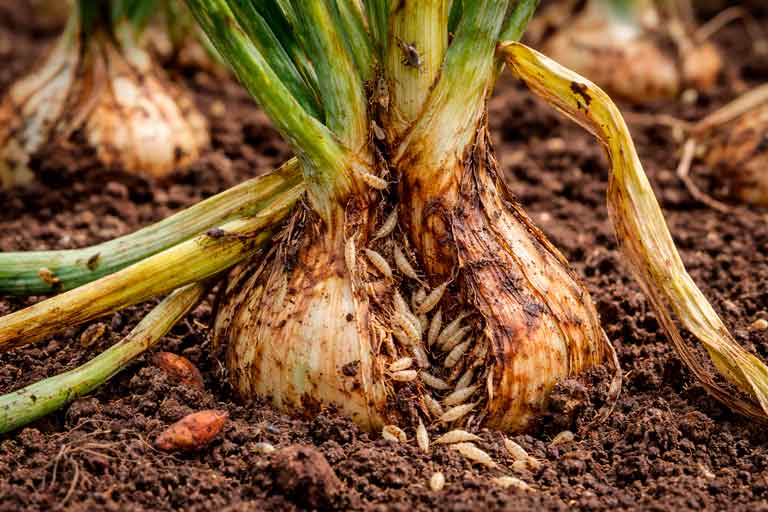
Welcome to our Novamulch agricultural space. This time we are going to go through a detailed map of diseases in onion (Allium cepa) cultivation, in all cultivation environments, from professional farms in the open field to productions in domestic and smaller spaces.
It is very important that, in order to avoid significant economic losses in our agricultural projects, we learn to identify the origin of these onion diseases; its fungal, bacterial, viral and physiological causes. In this way we will be able to deal with them preventively by following the symptoms, as well as successfully stop and solve the damage already caused.
Next, we will make a technical classification of diseases in onion cultivation according to the causal agent that originates them, proposing a solid basis for decision-making in the integrated management of our agricultural roadmap and the adoption of more sustainable agricultural practices.
Here is some interesting information about some diseases in onion cultivation:
https://www.agro.basf.es/es/Camposcopio/Secciones/Enfermedades-y-plagas/cebolla/?
And this varied analysis of diseases may interest us:
Fungal diseases in onion cultivation.
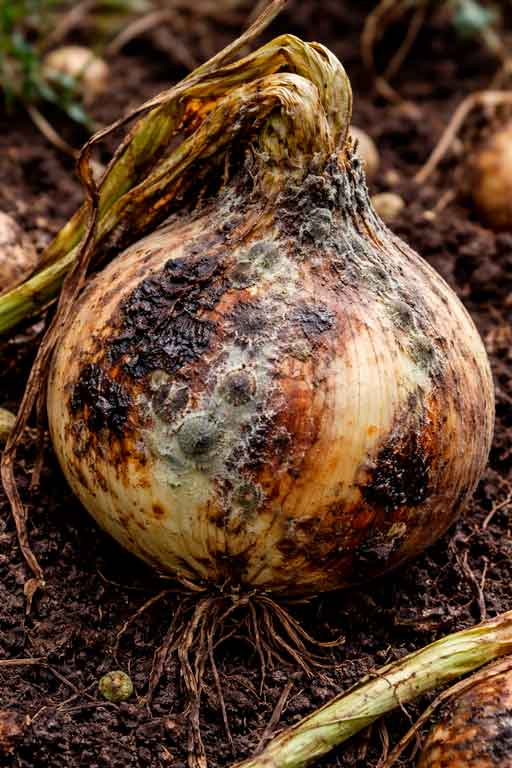
They are the most common and harmful throughout the crop cycle, especially in conditions of high humidity and mild temperatures. These pathogens mainly affect the leaves, neck and bulb of the plant, causing weakening, reduction in yield and significant losses in the field and after harvest, in case we do not take adequate preventive measures. Let’s see.
Onion mildew (Peronospora destructor).
Type: Oomycete (similar to the fungus).
Affected organ: leaves.
Damage caused: drastic reduction in growth and bulb size.
Wake-up call: it is a key disease in temperate and humid areas of Spain.
Onion rust (Puccinia allii).
Type: fungus.
Affected organ: leaves.
Damage caused: loss of the photosynthetic surface and weakening of the crop.
Stemphylium.
Causative agent: Stemphylium vesicarium.
Affected part: Leaves.
Symptoms: Watery spots that evolve to dark brown and merge.
Impact: Partial or total destruction of foliage.
Alternariosis.
Causative agent: Alternaria porri.
Affected part: Leaves and neck.
Symptoms: Dark spots with concentric rings and progressive necrosis.
Impact: Weakening of the plant and post-harvest problems.
White rot (Sclerotium cepivorum).
Type: soil fungus.
Organ affected: roots and bulb.
Damage caused: wilting and total loss of plants.
Risk: very persistent; Sclerotia survive for years in the soil.
What are sclerotia?
Sclerotia are resistance structures, compact masses of fungal tissue (mycelium), hard in consistency and dark in color that act as a survival organ, and produce some phytopathogenic fungi to survive for long periods in unfavorable environmental conditions.
In onion cultivation, sclerotia are associated with white rot and are located in the soil and plant debris, infecting roots and bulbs, which makes this disease very difficult to eradicate by conventional chemical treatments.
Agronomically, the presence of sclerotia forces us to implement long rotations, take extreme measures in soil hygiene and the machinery and tools with which we work it on a daily basis.
In addition, it is a priority to establish preventive strategies such as planning irrigation management in correct and balanced doses, preparing the soil in such a way that we obtain adequate levels of drainage and aeration, and making use of Novamulch biodegradable paper mulch so that we can ensure that we maintain a safe and optimal quality planting cycle.
Basal fusarium (Fusarium oxysporum f. sp. cepae).
Type: soil fungus.
Affected organ: base of the bulb.
Damage caused: basal rot, yellowing of the foliage and losses after harvest.
Impact: Losses in the field and in storage.
Bacterial diseases in onion cultivation.
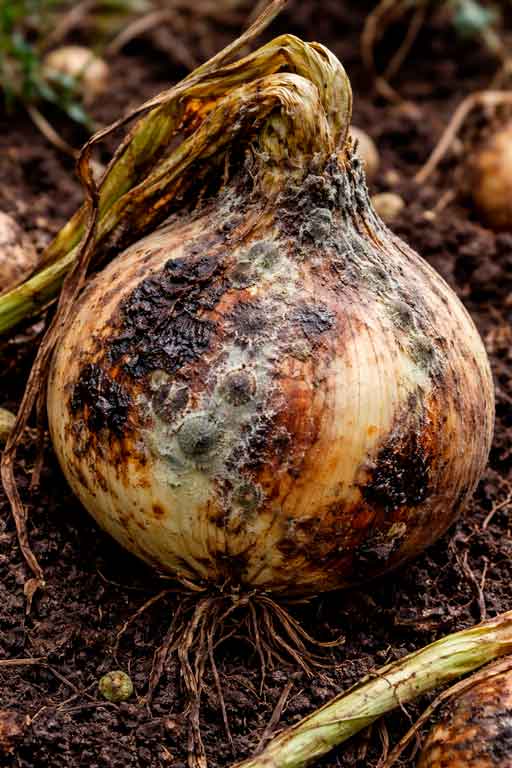
They mainly affect the bulb and neck of the plant, and usually appear when excess moisture is combined with wounds caused by improper mechanical handling, in poor conditions of handling or conservation of the fruits.
Although it is true that they are less frequent than the previous ones (fungal diseases), they manage to cause rapid rot and severe losses, especially during harvest and storage. This is why we must implement adequate preventive measures. Let us examine this classification.
Bacterial soft rot (Pectobacterium spp.).
Organ affected: bulb.
Symptoms: watery tissues and unpleasant odor.
Critical moment: in harvesting and storage.
Bacterial rot of the neck (Burkholderia cepacia).
Organ affected: neck of the bulb.
Damage caused: progressive deterioration during storage.
Viral diseases in onion cultivation.
Caused by viruses that are mainly transmitted through vectors such as aphids and thrips. They have no curative treatment, so in these cases, preventing and controlling the appearance and proliferation of these insect vectors becomes a priority.
Its symptoms may go unnoticed in the initial stages of cultivation; however, they trigger a progressive weakening of the plant, as well as leaf deformations and a precarious and reduced yield. Let’s study.
Onion yellow mosaic virus (OYDV).
Type: virus.
Symptoms: chlorotic mosaics, twisted leaves.
Result: significant reduction in performance.
Iris striatum virus (IYSV).
Iris striatum virus (IYSV).
Causative agent: IYSV virus.
Affected part: Leaves.
Symptoms: Chlorotic lesions and leaf necrosis.
Impact: Reduced caliber and yield.
Physiological (non-infectious) diseases in onion cultivation.
Also known as non-infectious because they are not caused by pathogens but by environmental factors and management errors such as nutritional imbalances, water stress, soil compaction or extreme temperatures.
These alterations affect the development of the bulb and the final quality of the crop and are usually prevented through appropriate agronomic management. Let’s see.
Damage caused by excess moisture:
Root asphyxia.
Increased predisposition to fungi and bacteria.
Nutritional imbalances.
Excess nitrogen that causes weak foliage and more sensitive to diseases.
Potassium deficiency that produces malformations in the bulbs and a precarious and deficient resistance.
Diseases in onion cultivation: classification according to the affected area of the plant structure.
Whether it is the leaf system, the neck, the roots or the bulb of the plant, this approach allows us to more easily identify the affected area we are going to treat, so that we can take more precise and active measures and controls, and we can reduce the impact of the disease on the development and yield of our crops. Let’s get started.
Foliar diseases in onion cultivation.
Mildew.
This fungal disease mainly affects the foliar system of the onion, producing elongated pale green to grayish spots as well as the appearance of purplish mold under conditions of high humidity levels.
Its development reduces the photosynthetic capacity of the plant, weakens the crop and can cause significant yield losses if we do not control it in time.
Rust.
This fungal disease of the leaf system is manifested by orange or brown pustules on the leaves, reducing the photosynthetic surface. Its advance weakens the plant and negatively affects the development and final size of the bulb.
Mosaic virus.
This viral disease of the leaf system causes chlorotic mottling, striations and deformations in the leaves, considerably affecting the growth of the plant. Their presence reduces crop yields and so far there is no curative treatment, so prevention is vital.
Bulb and neck diseases in onion cultivation.
In these cases, the effect falls directly on the commercial aspect of the plant and usually manifests itself in the advanced stages of the cycle, i.e. during harvest and storage.
These pathologies cause rot, softening of tissues and loss of quality, with prevention and proper management being key factors to avoid severe damage. Let’s analyze.
White rot.
White onion rot is a fungal disease that affects the bulb and neck, causing wilting, tissue putrefaction, and the appearance of white mycelium with black sclerotia.
It is a persistent soil pathology that can lead to total crop losses if not controlled preventively.
Fusarium.
Fusarium wilt of onion is a fungal disease of the soil that mainly affects the base of the bulb, causing progressive yellowing of the foliage and basal rot. Its development weakens the plant and causes losses in the field and during post-harvest, especially in conditions of stress and high temperatures.
Bacterial rots.
Bacterial rots in onion cultivation mainly affect the bulb and neck, causing soft, watery tissues and bad odor. They usually appear after wounds, excess humidity or poor conservation conditions, and cause rapid and severe losses, especially during harvest and storage.
Avoid diseases in onion cultivation by using Novamulch Biodegradable Paper Mulch, for sale here!
-
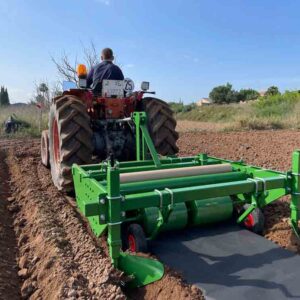
Novamulch agricultural mulching machine
-
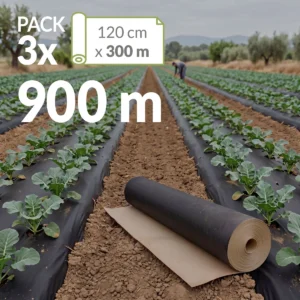
PACK of 3 rolls of Novamulch Professional paper 120 cm. x 300 m. (900 m)
299,15 € VAT included -
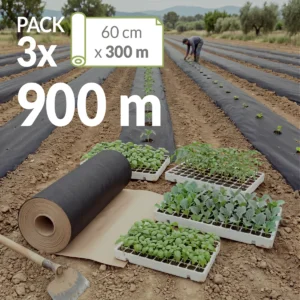
PACK of 3 rolls of Novamulch Professional paper 60 cm. x 300 m. (900 m)
149,78 € VAT included -
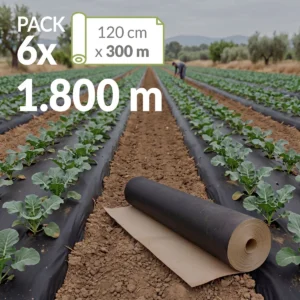
PACK of 6 rolls of Novamulch Professional paper 120 cm. x 300 m. (1.800 m)
599,20 € VAT included -
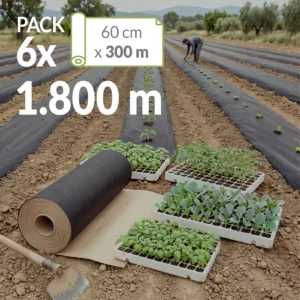
PACK of 6 rolls of Novamulch Professional paper 60 cm. x 300 m. (1.800 m)
299,15 € VAT included -
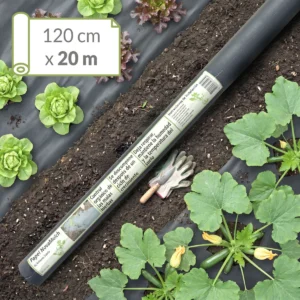
Novamulch paper 120 cm. x 20 m.
44,13 € VAT included -
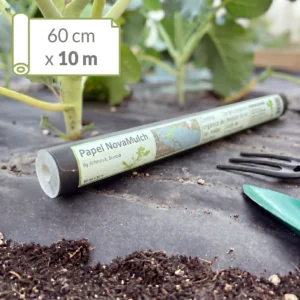
Novamulch paper 60 cm. x 10m.
15,74 € VAT included -
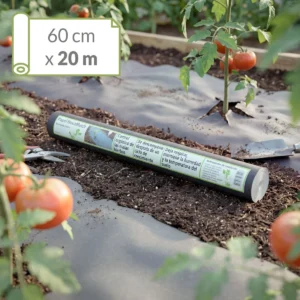
Novamulch paper 60 cm. x 20 m.
23,20 € VAT included -
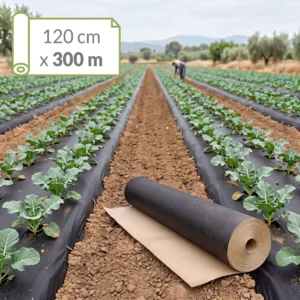
Novamulch Professional Paper 120 cm. x 300 m.
99,86 € VAT included -
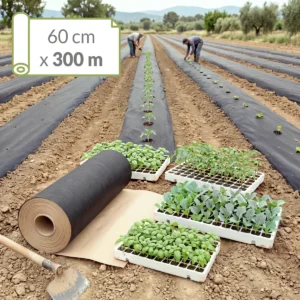
Novamulch Professional Paper 60 cm. x 300 m.
49,93 € VAT included
Why is it important to classify diseases in onion cultivation?
In our agricultural roadmap it is essential to include this type of classification to be forewarned and attentive to the signs and symptoms of possible diseases in onion cultivation.
From the moment we begin the preparation of the land in which we are going to plant, we must guarantee the health of the entire system we are going to create, from the soil to the complete cycle of each plant.
Identifying not only theoretically but also visually each of the possible fungal, bacterial, viral and physiological diseases of our onions will allow us to pre-treat and effectively achieve fully profitable crops of optimal quality.
Technically, these classifications facilitate correct choices in time and opportunity to take specific control measures, since each disease requires particular strategies. For example, soil fungi are not managed in the same way as insect-borne viruses or physiological alterations caused by handling errors.
On the other hand, implementing treatments without taking into account a prior and well-defined classification can increase our costs, favor resistance and aggravate the health problem.
In addition, classifying diseases in onion cultivation according to the area of the plant affected, whether in the foliar system, neck, bulb or roots, improves early detection in the field, allowing intervention before the damage reaches the commercial part of the crop. This approach will be key to reducing losses during and after harvest, in which many pathologies manifest themselves with greater intensity.
Finally, a correct classification contributes to the design of integrated and preventive management strategies, based on adequate rotations, irrigation control, nutritional balance and sustainable practices.
In this way, we protect our onion crop and improve both our production efficiency and the sustainability of the agricultural system in the long term.
So, let’s get on with it and all the best!