
Welcome to our agricultural space, Novamulch. Below, we’ll explore how to grow onions, reviewing their ancient origins, characteristics, and varieties. We’ll also map out the entire process, from planting to harvest and storage. This comprehensive guide will also cover the most common pests and diseases, how to detect them early, and how to address each one with effective, eco-friendly solutions. Let’s study.
Historical background and ancestral origin of onion cultivation.
The primary origin of onions lies in the semi-arid regions of Central Asia, encompassing parts of Iran, Afghanistan, Turkmenistan, Uzbekistan, and northwestern India and Pakistan, dating back 3,500 to 3,000 years. We are dealing with one of the oldest and most universally cultivated vegetables on the planet, and since ancient times it has left its mark on the development of agriculture.
Archaeological studies carried out in early settlements in present-day Iran, Turkmenistan and adjacent areas reveal traces of charred remains compatible with the genus Allium cepa.
However, even though this species does not leave easily identifiable seed traces after thousands of years, the repeated presence of remains of both wild and domesticated bulbs indicates a habitual consumption and early agricultural management of these crops, which demonstrates the ancestral existence of numerous wild species of Allium cepa, our onions, in these regions.
Nomadic populations gathered wild onions and used them as a staple food and in medicinal preparations. They were also highly valued for their durability when stored and cultivated in semi-arid climates, and for their ease of transport between regions. The first farmers in the area discovered how to cultivate onions in sandy loam soils with insufficient organic matter and subject to daily temperature fluctuations.
Furthermore, the seasonal rainy periods allowed for complete development, so these adverse conditions led to selection in the evolution of these species, resulting in larger bulbs with the ability to store water, a foliar system that resisted dehydration, and roots that developed properly in loose soils. These characteristics remain fundamental today for us to understand how to grow onions with optimal results in dry climates.
Ancient Egypt.
For many reasons onions were revered during this period in which they became established as a systematic, indispensable agricultural crop, widely used in all social strata.
- They were eaten raw to quench thirst, and were an essential part of the diet of those who were in charge of building the pyramids, along with garlic and radishes.
- It was used in religious rituals and medical practices, especially for respiratory problems.
- Their concentric circles were considered symbols of eternal life, and for this reason they were used in religious rituals, as an ingredient to prepare the remains of the deceased.
Onion motifs have been found in various Egyptian tombs, both in engravings and on mummified remains. Mummies such as that of Ramses IV (1155/1160 BC) have been found with small onions placed in their eye sockets, as well as in funerary offerings on altars to the gods and in images engraved on the interior walls of the pyramids.
Israel.
In the Bible (Numbers 11:5), the children of Israel lament the meager desert diet forced upon them by the Exodus: “We remember the fish we ate freely in Egypt, the cucumbers and melons and the leeks and onions and garlic.”
Greece and Rome.
The physician Pedanius Dioscorides (1st century AD) noted several medicinal uses for onions. The Greeks used them to strengthen athletes for the Olympic Games. The Romans, on the other hand, consumed them regularly and carried them with them on their journeys. In his “Natural History,” Pliny the Elder describes garden crops and refers to onions as a source of medicinal properties.
Middle Ages.
Between 500 and 1500 AD, monastic records such as Charlemagne’s Capitulare de Villis provide evidence of onions as an essential crop that served multiple purposes. Growing onions was a mandatory agricultural activity in medieval gardens, as they served not only as a daily food but also as an ingredient in ointments and medicines used to treat infections and digestive problems.
They also functioned as currency, used to pay rent, goods, and services. Onions were highly valued by these medieval communities for their ability to withstand harsh climates and periods of food scarcity.
Global expansion between the 15th and 18th centuries.
Onions were transported across the Americas by European colonists as part of the exchange of crops.
Various historical records show that the first colonists planted onions in regions such as Massachusetts in 1629 and Virginia in 1648, among others. From then on, this crop spread throughout the Americas, becoming an agricultural activity adopted by Native Americans due to its rapid acclimatization, ease of transport, and use as a form of currency.
From the 19th century to today.
During the 19th century, hybrid varieties and onions adaptable to different biological clocks or photoperiods (the specific development of plant morphology in response to the number of daily sunlight hours) began to be developed. Furthermore, agricultural practices became standardized, evolving to such an extent that onions today represent one of the most productive and profitable crops in the world.
Here is some additional information that may be of interest:
https://onion.nmsu.edu/history.html?
Agronomic and morphological characteristics that we need to know to grow onions.
How to grow onions to enhance their morphological characteristics?
Fasciculated and superficial root system.
Because onion roots are thin and originate at the base of the bulbs, they can be found approximately 20 to 30 cm deep. Therefore, we need to plan for a well-draining soil that is not prone to waterlogging. Keep in mind that for this reason, onions appreciate frequent but moderate watering.
Basal disc: the heart of the medulla.
This is a small, compressed, circular stem from which the roots and fleshy leaves emerge, and it will determine the final shape of our onions.
Foliar system.
The leaves consist of a sheath, a pseudostem, and a blade. Depending on the variety, they will be tubular, cylindrical, or subcylindrical, arranged alternately and intertwined. The leaf bases form the layers of each bulb, fulfilling the function of photosynthesis and nourishment, which will determine the final size of the fruit.
The bulb as a storage structure.
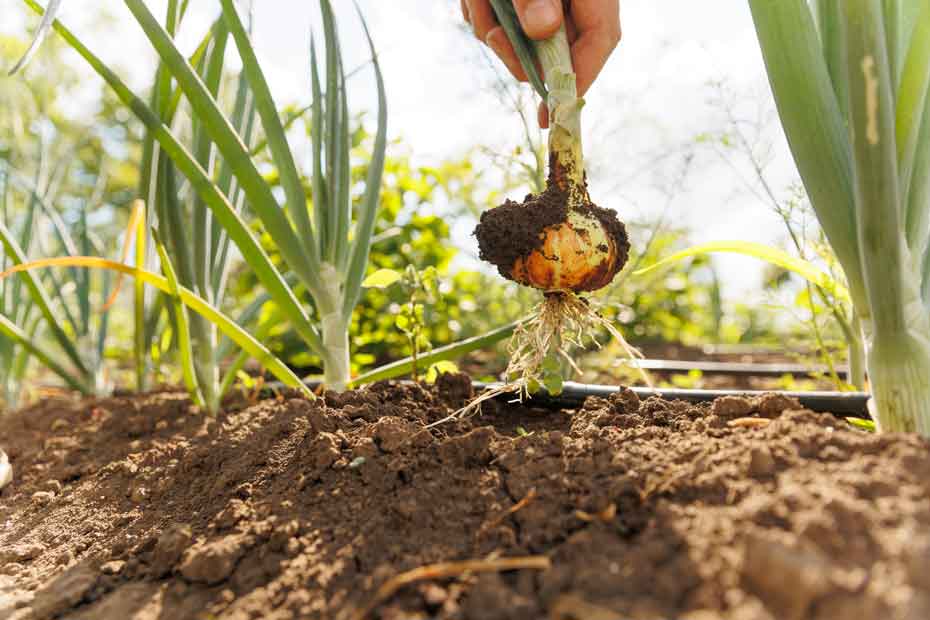
- It is the edible part of our Allium cepa, made up of modified leaves (cataphylls), fleshy, which serve as storage for water, sugars and minerals.
- During development, the outer layers become dry and always protect the bulbs.
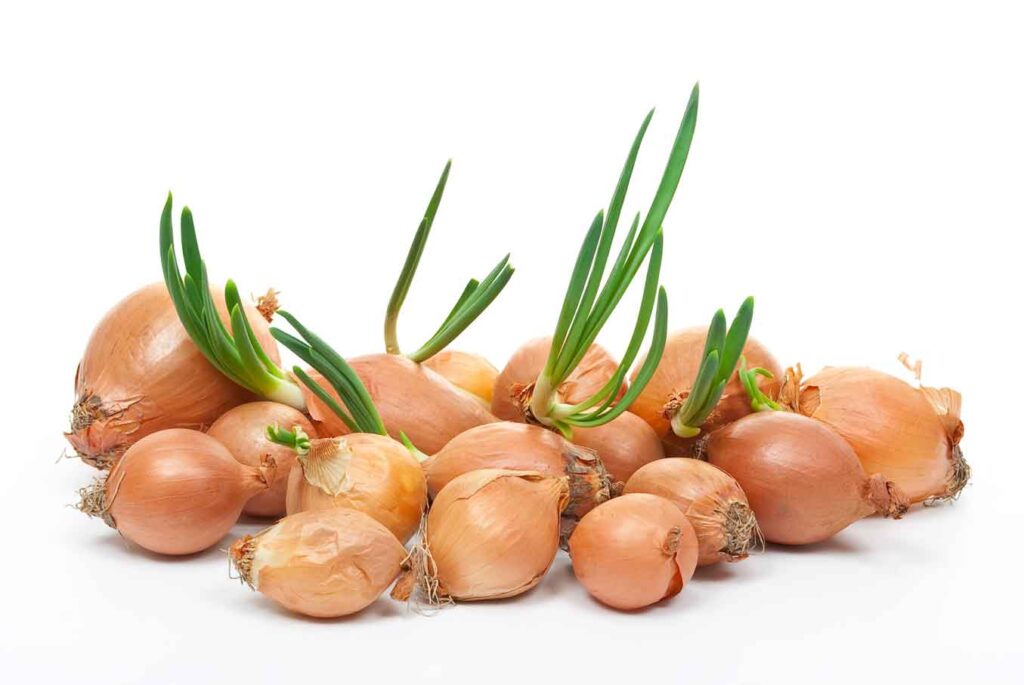
- Depending on the variety, they have shades of white, yellow, red or purple, and their shape varies: globular, flattened, elliptical or conical.
- This is where photoperiod plays a vital role in achieving optimal onion harvests. Let’s see.
- Short-day varieties will form bulbs with days between 10 and 12 hours of sunlight exposure.
- In contrast, long-day varieties will need between 14 and 16 hours of sunlight. We will study this further later.
Inflorescence.
Upon completing their life cycle, our onions develop a robust flowering stem called a scape, which is hollow and unbranched. This can measure between 50 and 150 cm and at its upper end produces a globose umbel that can contain 200 to 600 small flowers.
This moment is crucial if we want to obtain seeds, but not advisable if our goal is to produce quality bulbs. That’s why we must make specific decisions at this stage of our agricultural roadmap.
Fruit and seeds.
The onion produces a fruit in the form of a trilocular capsule, that is, a small dry organ divided into three internal compartments where 6 to 9 black seeds develop.
This structure explains that, if our project consists of generating seeds, we will allow some plants to reach their flowering stage and wait for these capsules to open.
How to grow onions to enhance their agronomic characteristics?
At this point in our roadmap, we must consider and organize in advance a series of agronomic techniques with which we can improve the yield, quality and size of our bulbs, their resistance to diseases and their ability to be preserved after each harvest.
Let’s always keep in mind that growing onions isn’t just about planting and harvesting. These beautiful plants are sensitive, depending on the variety, to the photoperiod we’ve already discussed, as well as to soil type and weather fluctuations. Properly managing our onion crops directly influences their agronomic characteristics and the results we’ve observed. Let’s explore some methods that can be very helpful.
Selection of varieties according to photoperiod.
It’s about choosing the right varieties that thrive according to the amount of sunlight each day in our environment. If the varieties we’ve chosen aren’t suitable for the photoperiod conditions where we’ll be planting, they won’t form bulbs and therefore won’t grow properly.
Having good guidance on how to grow onions starts with selecting the right genetics for our project:
- Short-day varieties (between 10 and 12 hours of sunlight) are suitable for warm and temperate climates.
- Varieties that require intermediate days (between 12 and 14 hours of sunlight) are well adapted to Mediterranean regions.
- Long-day varieties (between 14 and 16 hours of sunlight) are suitable for cold areas or high latitudes.
Recommended varieties that we can choose to grow onions.
Varieties according to photoperiod.
Remember that the photoperiod will determine the exact moment when the plant begins to form the bulb:
Short-day onions.
Sun exposure for 10 to 12 continuous hours.
Suitable for warm areas.
Favorable regions: Southern Spain and America (Andalusia, Murcia, Canary Islands, Tropical America).
Characteristics: They form bulbs quickly, which are sweet, juicy, and are grown in autumn and winter.
Known varieties:
- Texas Early Grain.
- Babosa.
- Grain of Gold.
- Sweet onion from Fuentes.
Onions from intermediate days.
Sun exposure for 12 to 14 continuous hours.
For temperate climates.
Favorable regions: Mediterranean (Castilla-La Mancha, Valencia, Extremadura).
Characteristics: Very versatile, large, thick and firm bulbs, within the expected range for each variety, uniform sizes among themselves (60/80 mm, 80/100 mm), generally falling into the premium category.
Common varieties:
- Hybelle.
- Rossa di Tropea.
- Intermediate Granex.
Long-day onions.
Sun exposure for 14 to 16 continuous hours.
For high latitudes, cold or temperate/cold climates.
Suitable regions: Northern Spain, Northern Europe.
Characteristics: They require long summer periods, produce large bulbs with firm skin, and have excellent preservation capacity.
Featured varieties:
- Sturon.
- Stuttgarter Riesen.
- Yellow Globe.
- Walla Walla.
Varieties according to bulb color.
White onions.
Characteristics: mild flavor, high moisture content, suitable for fresh consumption, have a lower shelf life.
Varieties:
- White Sweet Spanish.
- Snowball.
Yellow onions.
Features: balanced flavor, large storage capacity.
Varieties:
- Golden Straw.
- Yellow Granex.
- Stuttgarter.
Red onions.
Characteristics: higher content of anthocyanins (antioxidants), have a medium preservation capacity, very suitable for salads and fresh consumption.
Varieties:
- Red Creole.
- Red Baron.
- Amposta dwelling.
Varieties according to the growing cycle.
Short cycles between 90 and 120 days.
For warm climates.
Characteristics: produces early bulbs.
Varieties:
- Early Grain.
- Crystal Wax.
Intermediate cycles between 120 and 150 days.
Extensive climate adaptation.
Features: good size bulbs.
Varieties:
- Jaerla.
- Sturon.
Long cycles between 150 and 180 days.
Suitable for industrial production.
Characteristics: produces very large bulbs.
Varieties:
Yellow Sweet Spanish.
Pantoja.
Traditional Spanish varieties.
Spain has historical varieties that are highly valued by consumers and farmers, and they provide unique flavors, excellent texture, and very precise regional adaptations.
Varieties:
- Recas onion (Castilla-La Mancha).
- Fuentes de Ebro onion (PDO, Aragon).
- Purple onion from Zalla (Basque Country).
- Figueres onion (Catalonia).
Beneficial associations for growing onions.
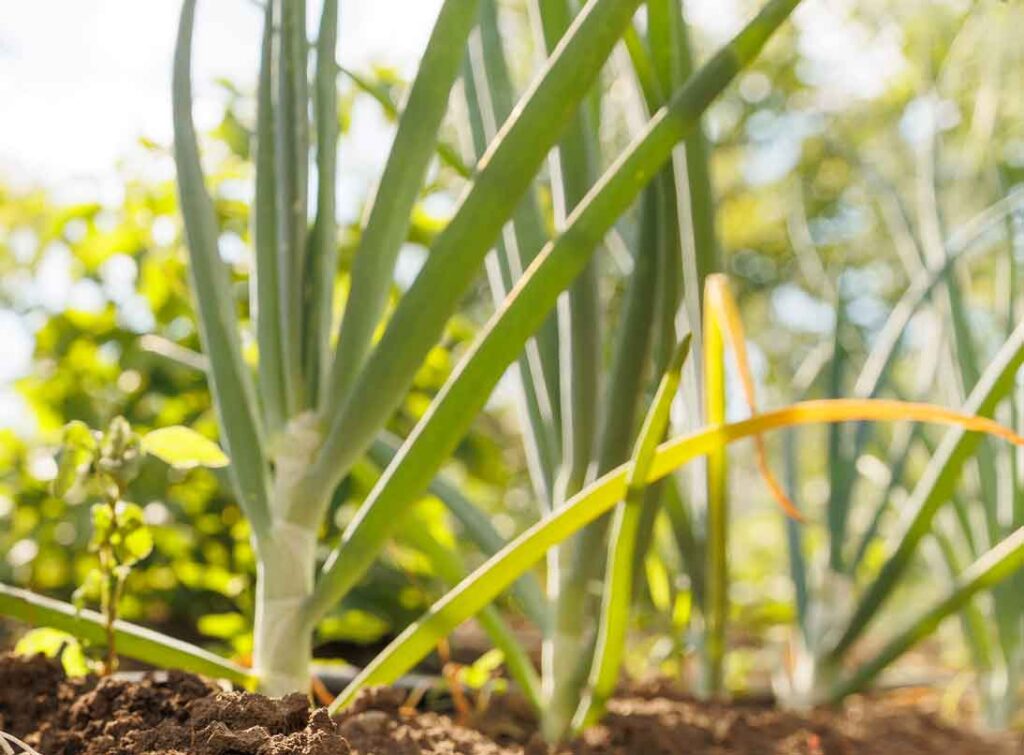
A special chapter that we must pay attention to when studying how to grow onions for optimal results is about planning appropriate species associations that allow us to improve growth, optimize nutrients, increase the yield of our fruit, and reduce common pests and diseases.
We suggest visiting articles we have published in our agricultural space Novamulch, and below we present them hoping that it will be much easier for us to learn how to associate compatible and beneficial plants to achieve a better ecological balance in our onion cultivation, and improve our production.
Let’s see how we can take advantage of this traditional agricultural technique of beneficial associations.
Carrots.
This combination produces a cross-aromatic barrier, as the foliage and characteristic aroma of carrots hinder the invasion of common onion pests, and in return, the strong aroma of onions repels the entry of typical carrot pests.
The root systems of both species occupy different depths. Onion roots are shallow (0 to 20 cm), while carrot roots are somewhat deeper (30 to 40 cm), which benefits the soil profile by promoting efficient nutrient use, better aeration and drainage, and almost no competition for water.
Let’s look at this information about the reciprocity between onions, carrots, and much more:
The root systems of both species occupy different depths. Onion roots are shallow (0 to 20 cm), while carrot roots are somewhat deeper (30 to 40 cm), which benefits the soil profile by promoting efficient nutrient use, better aeration and drainage, and almost no competition for water.
And below we present some articles from our agricultural section Novamulch, which will serve as a guide to studying other beneficial associations for growing onions:
How to grow onions in different environments?
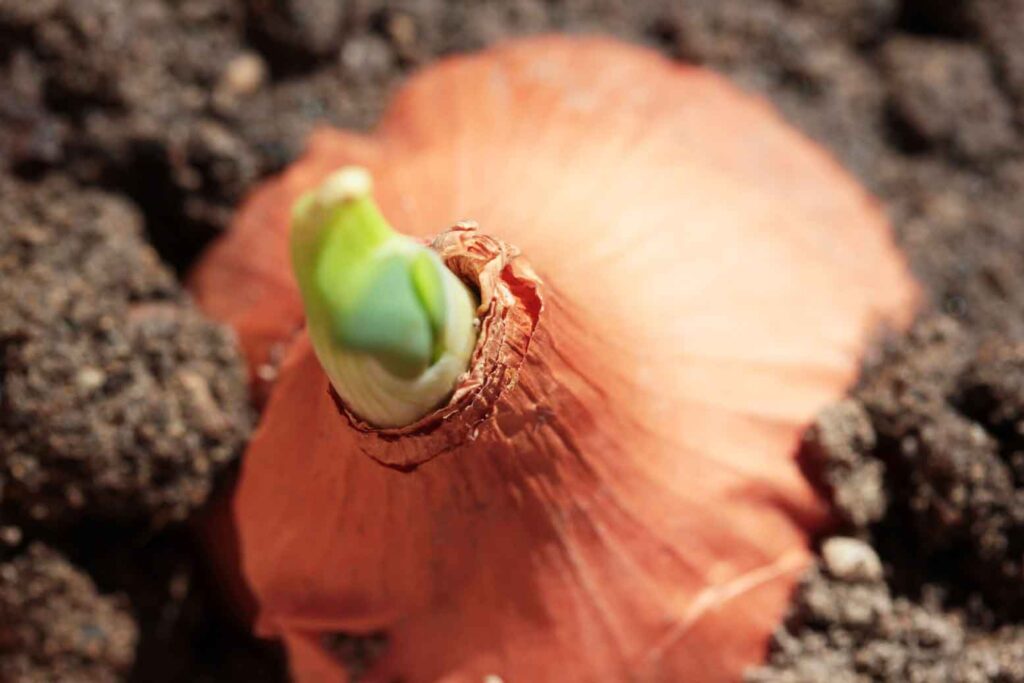
Let’s begin by implementing preventative strategies and preparing the soil with the right characteristics to maximize the development of our onions. Let’s analyze.
We need sandy loam soils, the most favorable for these species, as they have good drainage and aeration capacity, produce better bulbs, and do not compact easily.
It is advisable to level the land to distribute irrigation evenly, having previously removed all remnants of previous crops and hard objects (such as stones and compacted clods), and metal or plastic, and to start planting in previously rotated soils; all of this alters the composition of the arable land and consequently, our agricultural projects.
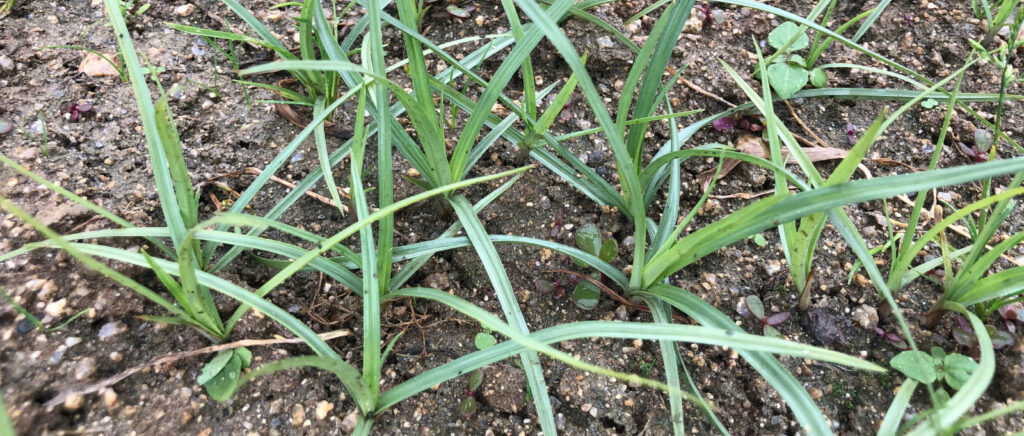
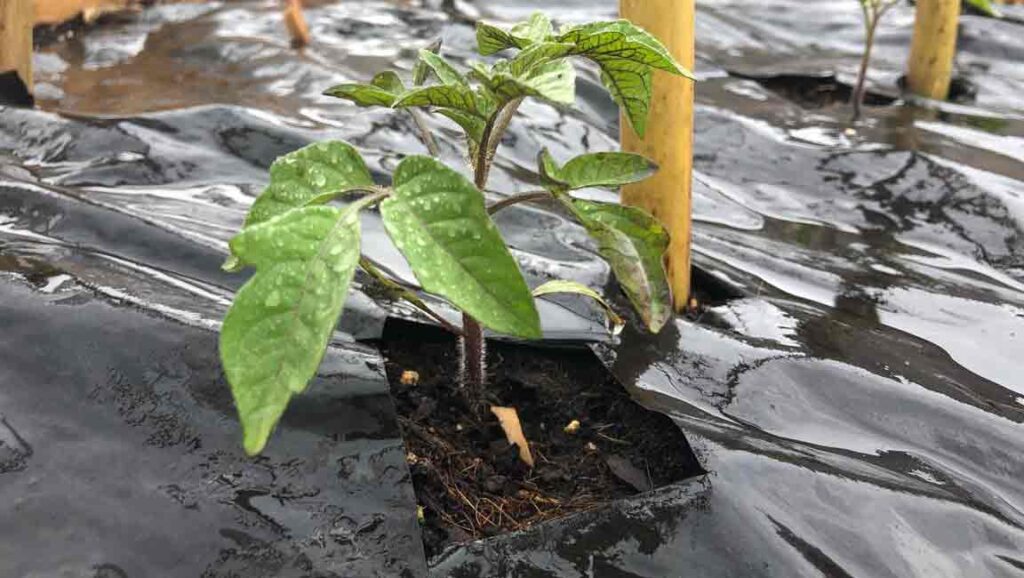
Before sowing, we can control the appearance and proliferation of weeds such as sedge by spreading Novamulch biodegradable paper mulch; and prior to sowing seeds or seedlings, we will open holes in the spread at the appropriate distance and depth.
The appropriate pH will be between 6.0 and 7.0, and it is important to do an initial fertilization and split it during the crop cycle to improve the size, flavor, firmness and durability of the bulb. The necessary nutrients are:
- A light to moderate addition of well-decomposed and loose compost.
- Nitrogen, which promotes leaf development, but without excess to avoid delaying bulb development.
- Phosphorus, which enriches cellular energy content and initial growth.
- Potassium, which produces adequate bulb thickening and healthy storage capacity.
- Sulfur, which promotes the appropriate synthesis of sulfur compounds; these are responsible for the flavor and nutritional and pharmaceutical value of onions.
Irrigation should be moderate and frequent during the growth of the foliage, gradually reducing it during the bulb formation phase. It is recommended to suspend irrigation 10 to 15 days before harvest to allow for drier bulbs, which have better storage capacity and are less susceptible to fungal diseases such as Botrytis and Downy Mildew, which we will discuss later.
We must take special care of the foliage of our onion crop, as the preservation of the entire plant structure and the desired bulb quality depend on it. We will avoid intense sunlight exposure and mechanical damage. Healthy foliage produces larger, firmer bulbs with better soluble solids content.
How to grow onions in open fields?
In our roadmap we will first observe how we should manage irrigation in this type of environment. Let’s study.
Frequent and moderate watering during leaf growth:
During the first 40 to 60 days, our onions need to maintain a slightly moist and never saturated soil, so we will water them lightly and frequently, avoiding humidity levels that favor the appearance of unwanted fungi or rot.
Reduction of irrigation during bulb formation:
At the moment when onions begin to thicken the base of their inner leaves, and stop their external leaf growth, they need a specific environmental stimulus to initiate bulb formation, and this is the photoperiod or amount of hours of sunlight available each day.
As we discussed previously in our Novamulch agricultural section, each onion variety is genetically programmed to begin bulb formation only when it receives the correct number of hours of sunlight.
This is because onions belong to a group of species that are extremely sensitive to day length, and their hormonal system detects when daily light reaches a certain threshold to activate the bulb thickening process.
At this stage, it’s advisable to reduce the volume of water and space out irrigations so that these bulbs can develop in the appropriate humid environment, without overwatering. This will improve their density and commercial quality.
So, what are the recommended distances for planting onion seeds and seedlings in open fields?
Let’s always keep in mind that onion cultivation requires soil free from competition from harmful species, as well as good aeration and drainage, and enough space for the bulbs to develop healthily. We know that their roots are shallow and sensitive to saturation and overcrowding.
Direct sowing of onion seeds.
This isn’t the most common method in commercial farming, but it is used in traditional agriculture and in some warm regions. However, if this is our case, we will sow the seeds with a spacing of 2 to 4 cm.
Once the seedlings reach a height of approximately 10 to 15 cm, we must thin out or remove the youngest or weakest ones after germination, leaving only the strongest ones with the correct spacing between them.
The recommended distance between rows is 30 to 40 cm, thus allowing enough space for them to develop fully.
Direct sowing of onion seedlings.
This technique is the most recommended because it offers advantages such as greater fruit uniformity, better sanitary control and earlier crop development, and the estimated distances can vary depending on the variety selected and the climate of the planting area.
Transplanting can be done with an approximate distance of 7 to 10 cm between seedlings, and between 30 and 35 cm between rows.
How to grow onions in a greenhouse?
As we know, greenhouse cultivation offers agronomic and productive benefits, especially in the case of onions, due to their sensitivity to unforeseen temperatures and climatic fluctuations, and the humidity, ventilation, and photoperiod requirements for each variety.
Furthermore, in these protected environments we can maintain greater control over these conditioning factors, and with good monitoring we will have excellent productivity and quality.
In the greenhouse, we establish efficient drip irrigation systems, which significantly saves us water costs, and by extending the biodegradable paper mulch Novamulch, we solve potential soil compaction, leaching, evaporation, and excessive humidity that is prone to the appearance of fungi and diseases.
We will produce better prices per kilo of onions because the bulbs are formed with a uniform size and greater density, and will have a longer shelf life after each harvest.
Our product supply will be continuous and stable, so in the greenhouse we can sow and transplant out of season, stagger sowing, and produce onions for months where the open field does not allow us to do so.
On the other hand, we are free to sow seeds as well as transplant seedlings, in alveolate trays or in trays with several compartments with a drainage hole at the base.
In these trays, we will sow one seed per cell or transplant a seedling; thus, each one will grow in its own space without risk of competition, the root grows vertically, compact, and does not become entangled with other plants, and the substrate we have added retains everything necessary for robust germination or vegetative growth, always preventing young leaves from touching between trays to avoid the appearance of fungi.
Growing onions in pots.
Not all onion varieties perform the same in confined spaces. For successful container cultivation, it’s essential to choose varieties that produce small to medium-sized bulbs, have short to medium growing cycles, don’t require a deep root system, and easily tolerate being confined in a substrate.
These varieties can be short-day (requiring between 10 and 12 hours of sunlight to begin bulb formation), such as Texas Early Grain, Babosa, Golden Grain, and Sweet White.
Other recommended varieties are spring onions or bunching onions, which don’t need to form a large bulb and therefore take up little space. They are perfect for small or long pots, have a minimal root system, and grow in very short cycles. Examples of these varieties include spring onions, green onions, and young garlic (Allium sativum).
By the way, we’ve added our article on garlic cultivation. It will serve as good supporting material.
We also have other options such as small or compact bulb onions: Cipollini (Italian, flat and small bulb), Red Creole (red, small and very aromatic), White Mini, and Yellow Sweet Mini. Their bulbs adapt easily to these smaller environments as they don’t need a lot of space to grow.
Medium-sized, intermediate-day onions thrive in pots 20-30 cm deep. They produce medium-sized bulbs: Amposta dwelling, Figueres, and Rossa di Tropea.
Multiplier onions or Shallots are highly recommended for pots because they require less space, produce several small bulbs per plant, and tolerate loose and confined substrate very well: Shallot Jersey and Shallot Red Sun.
Growing onions in organic home and urban gardens.
For these environments, we present three main planting methods: seeds, seedlings, and bulbs. Each technique has specific advantages, especially when seeking to learn how to grow onions sustainably, without chemicals, and making the most of available resources. Let’s take a look.
Organic sowing from seeds:
This is the most natural and economical method due to its low cost and reduced risk of introducing pests from nurseries. We should select certified organic seeds or seeds from local seed banks, and sow them in well-draining, compartmentalized trays or homemade seed trays.
We place the seeds between 0.5 and 1 cm deep and cover them lightly with good, loose substrate. It is important to keep track of the moisture levels. For this, we can spread Novamulch biodegradable paper mulch, which will help us avoid unforeseen problems, prevent weed growth, protect the substrate composition, and promote the development of beneficial microorganisms.
Organic sowing using seedlings (transplanting):
This method is ideal for urban gardens, as well as raised beds and pots. It saves time, allows for the selection of robust seedlings, reduces losses due to irregular germination, and ensures greater bulb uniformity. In these cases, the recommended spacing between seedlings is 10 to 15 cm between plants and 30 to 40 cm between rows; this allows for good air circulation and leaf overlap.
Growing onions on terraces and balconies.
When deciding how to grow onions in these environments, the containers we’ll be working with will be a crucial step in our roadmap.
Since onions develop a shallow root system and require stability, good drainage, and enough space for the bulb to thicken, the container must meet certain technical requirements. In these cases, the most effective options are deep pots, long planters, and raised beds. Let’s start with deep pots.
Let’s start with the deep pots.
We will choose containers with a minimum depth of 20 to 25 cm, a diameter of 20 to 30 cm (for medium-sized onions), and a capacity of 6 to 10 liters per plant (depending on the variety). These conditions offer certain advantages such as easy handling and movement of the containers, complete control of irrigation, a lower risk of soilborne diseases, and they will be perfect for small or tender varieties like spring onions and cipollini.
Planters as the best option for growing several onions in a row.
These systems allow us to relatively replicate open-field planting, as they enable us to arrange the plants in rows. They are an excellent option for long balconies, offering good air circulation between plants and facilitating the implementation of beneficial and ecological companion plantings such as intercropping carrots, lettuce, chamomile, and others.
Grow tables provide us with maximum comfort and improved ergonomics.
For large terraces, they are very convenient because we can work standing up, especially for people with reduced mobility. Furthermore, we will have greater thermal stability of the substrate and it will be easier to transplant and rotate crops comfortably.
The recommended surface area is approximately 60 x 80 cm, with a substrate depth of 20 to 30 cm. We must ensure that our containers have a good built-in drainage system and sufficient strength to remain stable against strong gusts of wind.
Novamulch biodegradable paper mulch as an advanced technique for growing onions.
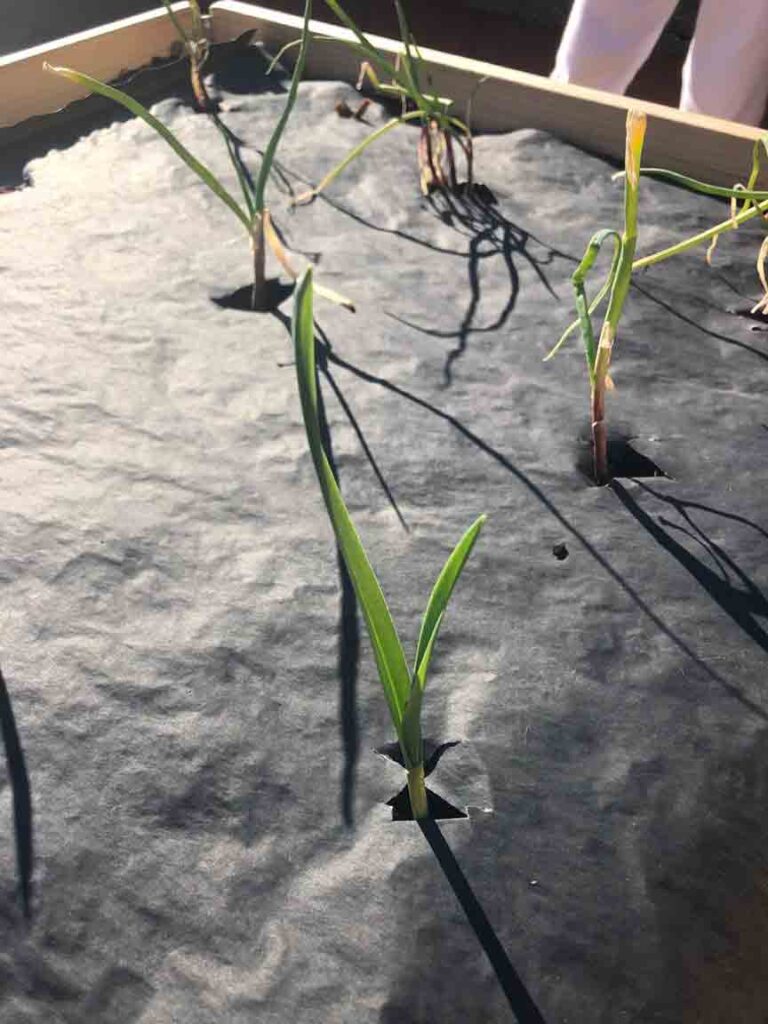
Biodegradable mulch has become a key tool for farmers looking to optimize soil management, improve irrigation efficiency, and reduce herbicide use. In particular, Novamulch biodegradable paper mulch stands out for its strength, biodegradability, and agronomic effectiveness.
Its use is especially important for those seeking to grow onions with higher yields, greater sustainability, and less manual labor.
Among the many advantages that Novamulch biodegradable paper mulch offers for cultivation in any environment, we find total control of the appearance and proliferation of weeds such as Nutgrass, and above all, in the case of our onion crop, Novamulch mulch also effectively fulfills the following functions:
- It blocks intense sunlight exposure on the soil and crops, reduces water stress during key phases such as leaf growth and bulb formation, and decreases evaporation.
- It improves the efficiency of drip irrigation, prevents excess moisture and mechanical handling of the soil, which can damage our plants.
- It is especially relevant in organic farms and in areas where chemical control is not allowed, it biodegrades through natural microbial action at the end of each planting cycle, becoming a rich nutrient for future agricultural projects, it leaves no residue, therefore, it does not require removal at the end of the crop, it reduces the carbon footprint, thus collaborating with the ecosystem and the soil microbiota.

Because Novamulch biodegradable paper mulch works as an excellent soil temperature stabilizer, it promotes root development in onions, accelerates germination when used in seedbeds or transplants, prevents sudden fluctuations that can damage the bulb, helps maintain a stable temperature throughout the planting cycle, and promotes robust bulb formation in onions.
You can purchase our Novamulch Biodegradable Paper Mulch here:
-
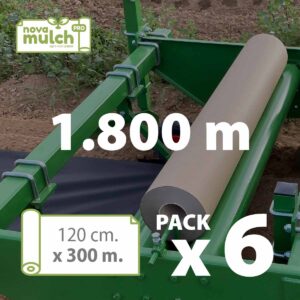 PACK of 6 rolls of Novamulch Professional paper 120 cm. x 300 m. (1.800 m)565,28 € VAT included
 -
 PACK of 3 rolls of Novamulch Professional paper 120 cm. x 300 m. (900 m)282,22 € VAT included
 -
 PACK of 6 rolls of Novamulch Professional paper 60 cm. x 300 m. (1.800 m)282,22 € VAT included
 -
 PACK of 3 rolls of Novamulch Professional paper 60 cm. x 300 m. (900 m)141,30 € VAT included
 -
 Novamulch Professional Paper 120 cm. x 300 m.94,21 € VAT included
 -
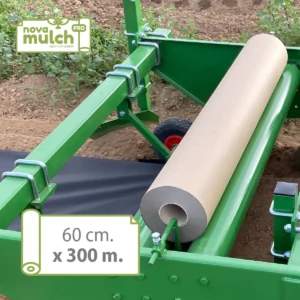 Novamulch Professional Paper 60 cm. x 300 m.47,10 € VAT included
 -
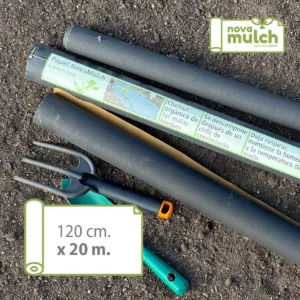 Novamulch paper 120 cm. x 20 m.41,63 € VAT included
 -
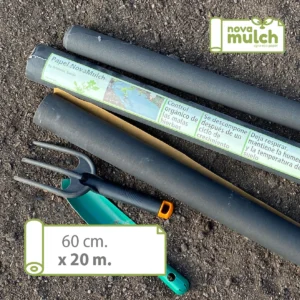 Novamulch paper 60 cm. x 20 m.21,89 € VAT included
 -
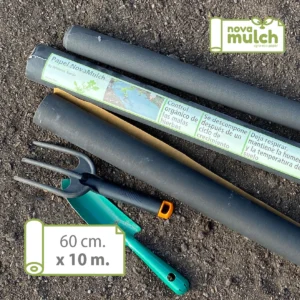 Novamulch paper 60 cm. x 10m.14,85 € VAT included
 -
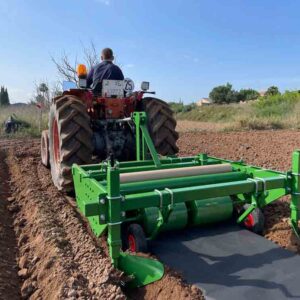 Novamulch agricultural mulching machine
What are the precise times for harvesting onions?
Knowing the exact harvest time is key when learning how to grow onions successfully. Harvesting times will determine the final size, storage quality, and health of the bulbs. Although the number of days can vary depending on the variety and the weather, there are precise and universal agronomic indicators that allow us to determine when onions are truly ready to be harvested.
Let’s examine several factors:
Cycle duration according to the type of onions.
The growing cycle will depend on the photoperiod and the varieties we have selected.
For short-day onions:
Cycle between 90 and 110 days from transplanting.
Harvest: from late spring to early summer.
Common varieties: Texas Early Grain, Babosa, Grain of Gold.
For onions that mature in between days:
Cycle between 110 and 140 days from transplanting.
Harvest: during the summer.
Mediterranean varieties such as Figueres or Amposta dwelling.
For long-day onions:
Cycle between 140 and 170 days from transplanting.
Harvest: from late summer to early autumn.
Varieties most commonly grown in colder climates of Northern Europe: Sturon, Stuttgarter Riesen (or Stuttgarter Giant), Rijnsburger (series), Ailsa Craig, Red Baron (long-day), Hyfield and other Nordic hybrids, Snowball/White Lisbon (long-day type), and Stuttgart Red or Red Karmen.
Most reliable visual indicator: the natural foliage cushioning.
The most common sign used to determine the exact time of harvest is when the leaves lie down or fold between 50% and 80% naturally, which indicates that the bulbing process has ended, physiological maturity has been achieved, the appropriate thickness of the outer tunics of the onions or dry and protective layers that envelop the bulb once it has completed its maturation (these outer tunics are the skins we see when opening an onion, and have golden, white, purple or reddish tones, depending on each variety), and the beginning of dehydration of the neck.
Agronomic confirmation: the neck of the bulb should be soft.
To achieve a good harvest, gently press the neck of the bulb, which should feel soft and squeezable, never hard or swollen. This point marks the natural end of the cycle.
Time between the folding of the foliage and the onion harvest.
Once the foliage falls, it is advisable to wait between 7 and 14 days before starting the harvest, which allows the bulb to fully mature, the outer layers or tunics to dry, and we will avoid the risk of harvesting onions with thick necks; this will reduce their capacity for healthy preservation and storage.
We present several data points so that we can determine when not to proceed with harvesting our onions:
When the foliage remains firm and upright, when we observe a thick, green neck, and when the bulb does not have dry tunics.
If the required period of 60 days or more for the growth and maturation cycle to be completed has not been waited for, depending on the variety, we will produce small bulbs with less sweetness and poor preservation capacity, with a very likely risk of fruit rot.
Ideal conditions for harvesting our onions.
To maximize the quality and durability of our agricultural project, we must harvest on dry, sunny days, and never after rain.
Likewise, we should avoid exposing the bulb to high levels of humidity during harvesting and take care not to damage the outer layers.
Harvest signs for onions according to their end use.
For spring onions:
Harvest between 60 and 80 days when the foliage is still green and the bulb is small or has not yet formed. Our onions will have a better, milder, and fresher flavor, depending on their final use.
For onions that we are going to store:
It is advisable to wait until the peak of the cycle, with well-formed tunics, a completely soft neck, and the foliage having fallen naturally.
We will also try to cure the bulbs, that is, after harvesting, we will let them dry in a controlled and progressive way to close the neck, which must dehydrate until it is thin and completely sealed, preventing the entry of fungi.
We will allow the outer tunics to harden so that the skins become tough and dry; in this way we will protect the bulbs for months.
These steps are suitable for preserving our onions for between 4 and 8 months, depending on the variety.
How should we properly store onions after harvesting?
- We will place them in ventilated spaces: sheds without humidity, open greenhouses, structures or facilities with shade (we will avoid direct sunlight exposure), on grids or trays always raised off the ground.
- The ideal temperature for good storage will be between 25° and 30°C, plus a relative humidity of up to 70%, for a recommended period of 10 to 14 days, to produce a slow but safe drying process.
- Similarly, we will turn or move the bulbs slightly to ensure even drying, trimming the leaves and roots only at the end and never before curing, as we risk opening pathways for pathogens, losing moisture in the bulbs and reducing their shelf life.
- After the curing process, we will cut the roots to 1 cm and the leaves to 2 or 3 cm.
Common pests and diseases that we must take into account before growing onions.
Pests.
Onion fly (Delia antiqua).
Causes and appearance:
A very common insect in Europe and temperate regions.
The larvae feed on the developing bulb.
It causes serious damage to seedlings and young onions.
Symptoms:
Sudden wilting of leaves.
Bulb perforated and soft.
Foul odor due to internal rot.
Plants that easily fall apart.
Favorable conditions:
Very damp soils.
Cool springs, with temperatures ranging between 10° and 20°C.
Presence of undecomposed organic matter.
Ecological prevention:
Minimum 3-year crop rotation without replanting Allium.
Seedbeds protected with anti-escape netting.
Removal of crop residues.
Ecological control:
Yellow sticky traps for adults.
Insect netting with an estimated thickness between 0.8 and 1 mm.
Application of Bacillus thuringiensis in early preventative treatments.
Biodegradable Novamulch paper mulch to reduce egg inoculation in the soil.
Onion thrips (Thrips tabaci).
Causes:
A very common sap-sucking insect in dry climates.
It feeds on leaves, weakening the plant.
Symptoms:
Silvery or whitish leaves.
Linear spots and discoloration.
Small bulbs due to reduced photosynthesis.
Presence of tiny insects when the plant is shaken.
Favorable conditions:
Temperatures above 25°C.
Dry environments and low relative humidity.
Excess nitrogen, as it promotes the formation of tender tissues.
Ecological prevention:
Targeted sprinkler irrigation to increase ambient humidity.
Removal of host weeds. Companion planting with carrots or calendula.
Ecological control:
Specific blue traps for thrips.
Neem extract (azadirachtin).
Potassium soap applied to the underside of leaves.
Release of Amblyseius swirskii or Orius laevigatus as a biological control method.
Leaf miner (Liriomyza spp.)
Symptoms:
Serpentine tunnels within the leaves.
Weakened and necrotic leaves.
Reduced bulb size.
Favorable conditions:
Mild temperatures, between 20 and 28°C.
Abundant nearby vegetation.
Ecological prevention:
Insect netting.
Keep the garden weed-free.
Rotation with nightshades or cruciferous plants.
Ecological control:
Yellow sticky traps.
Hygienic pruning of affected leaves.
Use of Beauveria bassiana (entomopathogenic fungus).
Bulb nematodes (Ditylenchus dipsaci).
Symptoms:
Swelling of the neck.
Bulb deformities.
Crooked leaves and stunted growth.
Concentric rings inside the onion.
Favorable conditions:
Heavy or poorly drained soils.
Fields with a history of Allium cultivation.
Ecological prevention:
4- to 5-year crop rotation.
Well-aerated, well-drained soils.
Use of certified nematode-free seedlings.
Ecological control:
Soil solarization.
Incorporation of white mustard as green manure (natural biofumigation).
Aloe vera or garlic extracts as mild nematicides.
Garlic and onion aphid (Neotoxoptera formosana).
Symptoms:
Deformed rosettes.
Sticky honeydew.
Yellowish or curled leaves.
Presence of ants (which “herd” aphids).
Favorable conditions:
Wet spring.
Excess nitrogen.
Weakened plants.
Ecological prevention:
Plant onions alongside marigolds, basil, or cilantro.
Avoid excessive nitrogen fertilization.
Proper irrigation management.
Ecological control:
Potassium soap.
Neem extract.
Agricultural paraffin oil (certified organic).
Biological control with ladybugs and lacewings.
Onion weevil or beetle (Ceutorhynchus suturalis).
Symptoms:
Round spots on the leaves.
Larvae inside the pseudostem.
Stunted growth.
Favorable conditions:
Mild winters.
Soils with high organic matter content.
Environmental prevention:
Maintain adequate distances.
Crop rotation.
Remove onion waste after harvest.
Ecological control:
Chromatic traps.
Neem oil.
Hand harvesting in small gardens.
General ecological prevention in onion cultivation. Useful tips.
- Crop rotation of 3 to 5 years.
- Avoid accumulation of specific Allium pests.
- Implement the use of Novamulch biodegradable paper mulch, which reduces surface moisture, inhibits weeds, hinders egg-laying, and provides good drainage quality while allowing only essential drip irrigation.
- Remember that excess water increases the possibility of rotting the entire plant structure and attracts bulb flies.
- Companion planting: Onions and carrots act as mutual repellents. Let’s review the beneficial companion plantings we previously featured in this agricultural guide on growing onions.
Common diseases in onion cultivation.
Onion downy mildew.
Pathogen: Peronospora destructor.
Causes and appearance: This fungus is very common in damp, cool areas.
It spreads through wind-borne spores.
It primarily affects the foliage.
Symptoms:
Pale yellow spots on the leaves.
Appearance of a gray/purple powder on the underside of the leaves.
Stunted bulb growth.
Drooping and necrotic leaves.
Favorable conditions:
Approximate relative humidity of 90%.
Temperatures between 10° and 18°C.
Sprinkler irrigation and low ventilation.
Ecological prevention:
Rotate crops for 3 years.
Use drip irrigation; never sprinkler irrigation.
Proper spacing between plants; avoid high densities and leaf collisions.
Use Novamulch biodegradable paper mulch to reduce moisture on the foliage.
Organic control:
Preventive applications of horsetail (rich in silica, fungistatic).
Propolis extract, with a natural antifungal effect.
Potassium bicarbonate (permitted in organic farming).
Adequate ventilation in greenhouses.
Botrytis or neck rot.
Pathogen: Botrytis allii, B. cinerea.
Causes:
Pathogen that enters through the neck or wounds.
Very common in humid areas and after harvest time.
Symptoms:
Soft, damp neck and foul odor.
Appearance of gray mold.
Bulbs that give way when pressed.
Progressive rotting during storage.
Favorable conditions:
High humidity levels.
Premature harvesting without neck closure.
Insufficient curing.
Poorly ventilated storage.
Ecological prevention:
Harvest at the exact time; between 50% and 80% of the foliage has fallen.
Proper curing for 10 to 14 days.
Avoid bruising or injury during harvesting.
Store at up to 70% relative humidity and ensure good ventilation.
Ecological control:
Intensive ventilation after harvest.
Prompt removal of infected bulbs.
Preventive treatments with garlic extract or propolis.
Fusarium bulbitis.
Pathogen: Fusarium oxysporum f. sp. cepae.
Causes:
Soil fungus with prolonged survival.
It penetrates through damaged roots or in the presence of water stress.
Symptoms:
Root browning.
Soft neck and brown interior.
Bulb with watery or reddish rings.
Plants that dry out prematurely.
Favorable conditions:
Warm soils, between 25° and 28°C.
Excessive moisture and poor drainage.
Compacted or heavy soils.
Ecological prevention:
Crop rotations of 4 to 5 years.
Well-aerated soils rich in organic matter.
Biodegradable Novamulch paper mulch to prevent soil splashing.
Avoid excessive watering.
Ecological control:
Biofumigation with white mustard or brassicas.
Use of well-rotted compost, which reduces Fusarium inoculum.
Trichoderma harzianum as an effective biological control.
Purple spot.
Pathogen: Alternaria porri.
Causes:
It primarily attacks the foliage.
It thrives in nighttime humidity and daytime heat.
Symptoms:
Elongated, dark purple spots.
Yellow halos around the lesions.
Leaves drying from the tip downwards.
Severe reduction in bulb size.
Favorable conditions:
Relative humidity above 80%.
Temperatures between 20° and 30°C.
Presence of heavy dew.
Ecological prevention:
Airy planting densities.
Early watering to avoid nighttime dampness.
Removal of infected plant debris.
Ecological control:
Applications of neem oil (fungistatic).
Biofungicides with Bacillus subtilis.
Natural extracts of nettle or chamomile.
Anthracnose.
Pathogen: Colletotrichum circinans.
Symptoms:
Sunken, watery spots on leaves.
Circular black spots in advanced rot.
Weak plants with reduced bulb formation.
Favorable conditions:
Frequent rain.
Temperatures above 25°C.
High humidity and poor ventilation.
Prevention and ecological control:
Crop rotations.
Avoid wetting the foliage.
Applications of organic copper (authorized).
Garlic extract or propolis as preventative measures.
Bacterial bulbitis.
Pathogens: multiple species such as Pseudomonas spp., Erwinia spp. and Burkholderia cepacia.
Symptoms:
Strong, unpleasant odor.
Soft, watery bulb.
Internal wet rot.
Yellowish, viscous fluid.
Causes and favorable conditions:
Excess water.
High temperatures after rain.
Improper storage.
Mechanical damage to the crop.
Ecological prevention:
Moderate watering.
Dry harvesting.
Very careful curing.
Disinfected tools.
Ecological control:
Immediate removal of infected bulbs.
Constant ventilation.
Increased organic matter to improve beneficial microbiota.
General ecological prevention against diseases:
- Crop rotation of 3 to 5 years to avoid the accumulation of Allium pathogens.
- Biodegradable mulch (Novamulch) to reduce soil splash and direct moisture on foliage. It also prevents weed growth.
- Drip irrigation to minimize foliar moisture, the main factor in fungal growth.
- Proper curing of onions prevents botrytis and bacterial diseases during storage.
- Healthy, well-aerated soils. Beneficial microorganisms compete against Fusarium, Alternaria, and other pathogens.
Final considerations and reflections.

How to grow onions? We’ve reviewed every step of this process in detail, which, when approached with love and care, will yield invaluable rewards. Since their ancient origins, onions have been, are, and will continue to be essential in our daily lives and in their many forms.