

How to plant zucchini on a large scale using Novamulch biodegradable paper mulch and optimize production.
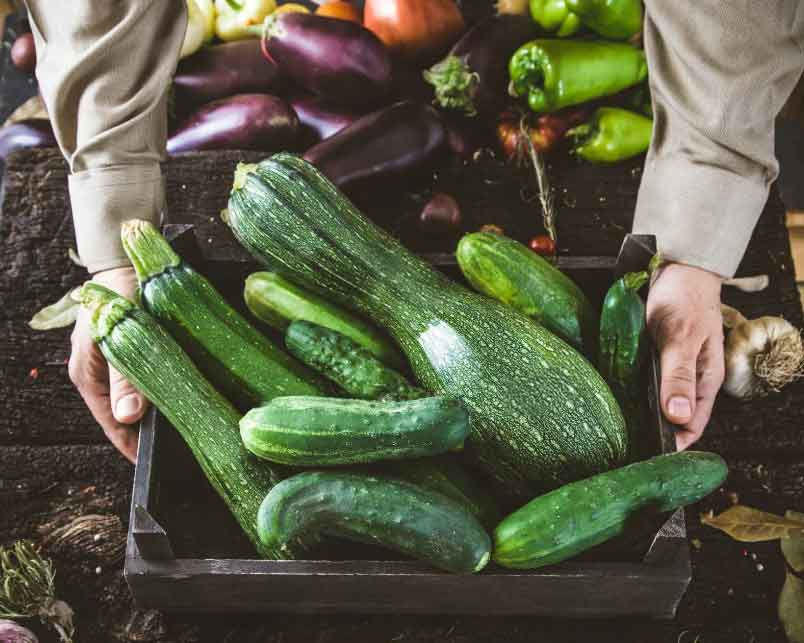
Zucchini are fast-growing vegetables. They require favorable temperatures, good sun exposure, and fertile, well-drained soil, as well as a regular water supply throughout the growing cycle.
In large-scale agricultural operations, maintaining these conditions uniformly is particularly important for achieving uniform plants and fruit of good commercial quality.
Novamulch biodegradable paper mulch is particularly effective, as it helps create stable conditions along the planting rows. When combined with a drip irrigation system installed beneath the Novamulch paper, it balances moisture and temperature levels while improving maintenance efficiency, reducing irrigation and end-of-cycle waste removal costs, and keeping invasive weeds—such as nutgrass—under control.
For large-scale operations, Novamulch offers an additional operational advantage: it can be installed using agricultural mulching machinery, facilitating uniform application across extensive production lines; furthermore, at the end of the harvest, the biodegradable Novamulch paper is incorporated into the soil, eliminating the need to remove conventional polyethylene sheeting.

Novamulch: an advanced, eco-friendly solution for planting zucchini on a large scale.
Novamulch paper bears the FSC seal, meaning we produce paper using wood sourced from responsibly managed forests.
Por otra parte, este material actúa como barrera física sobre el terreno durante todo el ciclo de sembrado de los calabacines, a diferencia del polietileno convencional que ha sido concebido para biodegradarse parcialmente y genera costes de retirada y gestión de residuos al final de cada cosecha.
Así, el acolchado de papel biodegradable Novamulch permite crear sistemas profesionales de producción hortícola sostenibles y totalmente ecológicos.

Economic benefits of Novamulch paper for planting zucchini in large areas.
In large-scale agricultural operations, there is a significant difference regarding investment, maintenance, crop monitoring, and commercial results.
Conventional polyethylene used as mulch must be removed, collected, transported, and managed as waste. These operations incur costs for machinery, labor, and treatment.
In contrast, Novamulch paper is designed to naturally incorporate into the soil at the end of the cycle, eliminating the specific task of removing conventional plastic sheeting.
For large-scale industrial applications, Novamulch’s biodegradable nature is particularly significant, as labor hours and machinery operations increase in proportion to the cultivated area.
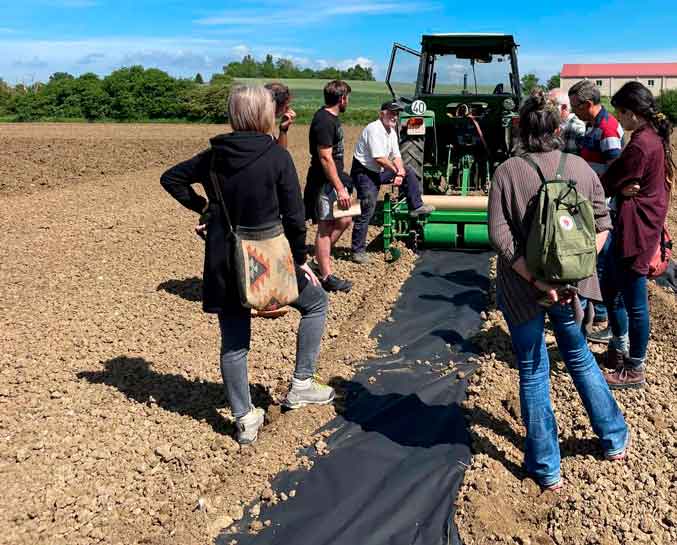
How to install Novamulch biodegradable mulch for planting zucchini on a large scale.
Below, we outline the essential preliminary steps to promote healthy growth and uniform zucchini production using our biodegradable Novamulch.
1. Clear the planting area by removing plant debris, stones, waste, weeds, and remnants of previous crops that could hinder root development or damage the mulch paper.
2. Prepare and aerate the soil, ensuring it is loose, well-drained, level, and rich in nutrients. Zucchini thrives in fertile soil, so you can incorporate organic matter or well-decomposed compost.
3. Install the drip irrigation system along the planting line before laying down the Novamulch paper.
This way, water reaches the root zone directly, maintaining consistent moisture without wetting the foliage, as the Novamulch paper creates a barrier between the developing plant and the soil.
4. Lay the Novamulch paper over the ground, ensuring it sits flat and is free of excessive tension. Secure the edges with soil to prevent displacement caused by the wind.
5. Make the necessary holes for each seedling or seed, maintaining sufficiently wide spacing (approximately 100 to 150 cm between rows) so that the zucchini plant can develop its large leaves, receive adequate light, and maintain proper aeration.
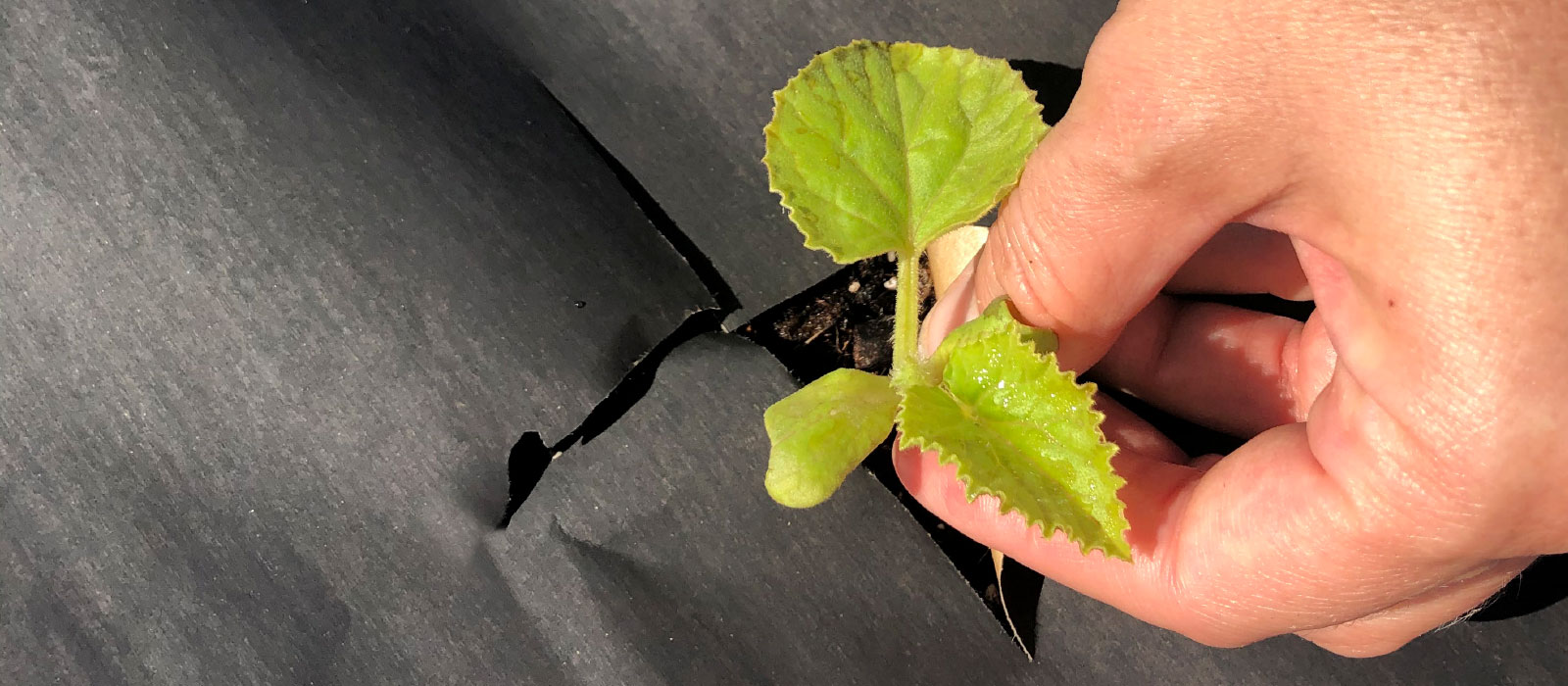
6. Place the zucchini seedlings by inserting the root ball into each opening and gently firming the soil around the roots. Direct sowing is also an option when temperature conditions and the cultivation system allow for it.
A suitable combination of soil preparation, irrigation system, and the laying of Novamulch paper creates favorable conditions for producing healthy, clean, and uniform zucchini of good commercial quality.
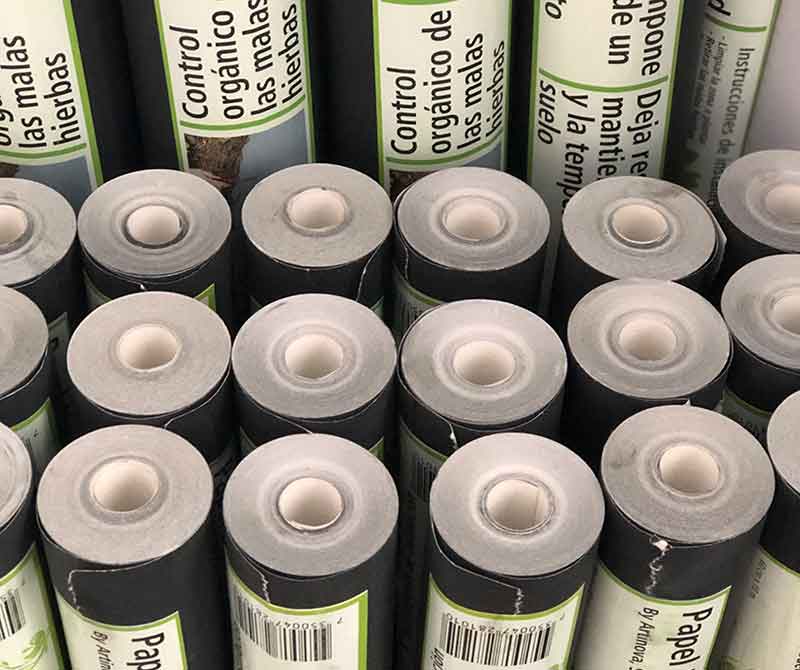
Where to buy Novamulch garden mulching paper?
You can buy the NovaMulch biodegradable mulch paper directly here, on our website, in different formats designed for both small gardens and agricultural extensions.
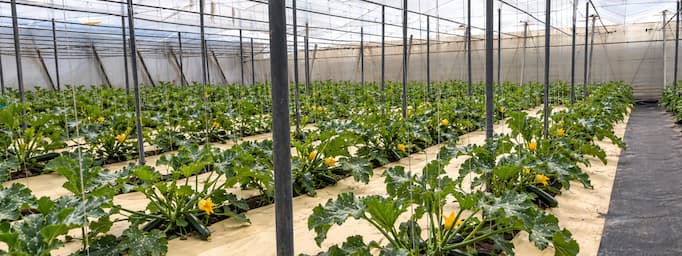
Biodegradable paper mulch for planting zucchini in industrial-scale greenhouses.
In these protected environments, it is easier to work despite rain and wind; however, it is necessary to establish precise control over factors such as humidity and temperature levels, as well as the water supplies required for each stage of cultivation.
Although a greenhouse is a controlled environment, it is advisable to secure the edges of the Novamulch paper to ensure stability during maintenance, monitoring, and the growth of the zucchini plants.
In large greenhouses, it is easier to set up long, uniform production rows, which allows for the organized management of irrigation, planting layout, and the handling of each sector.
In addition, Novamulch creates a continuous surface around the plants that reduces contact between the lowest-hanging fruit and the soil, helping to maintain a cleaner and more uniform growing area.
For these reasons, the use of Novamulch biodegradable paper mulch for greenhouse zucchini not only allows for the replacement of conventional agricultural plastic but also integrates ecologically into professional systems where uniformity, irrigation control, and operational efficiency are essential for achieving high commercial quality production.
Recommended irrigation for planting zucchini on a large scale
For large zucchini plantings, the most effective and safest combination is installing Novamulch paper with localized drip irrigation placed underneath the paper.
This system allows water to be supplied directly to the root development zone and enables the management of each irrigation sector according to the crop’s actual and evolving needs.
In professional zucchini operations, it is not advisable to always apply the same amount of water or maintain a fixed irrigation frequency. Irrigation must be adjusted based on the plant’s growth stage, soil type and moisture-retention capacity, temperature, sunlight intensity, and the specific conditions of each growing area or greenhouse.
Let us remember that it is important to avoid moisture deficiency as well as overwatering.

Novamulch paper quilting machine.
Novamulch biodegradable paper mulch can be laid manually or using an agricultural plastic mulch layer or a machine specifically designed for laying biodegradable paper mulch.
Tape rolls or even paper-marking discs can be attached to the machine’s main body, facilitating the subsequent placement of seedlings and seeds. This mechanization ensures continuous, uniform planting along the crop rows—a particularly important factor when working on large areas.
Novamulch and Maquinaria Agrícola Lose (manufacturers since 1981) have developed this machine specifically for laying biodegradable paper mulch.
It is advisable to carry out this installation before laying out the planting rows for the zucchini, and to use irrigation systems—preferably drip irrigation via tapes or pipes.
Novamulch controls nutgrass and improves zucchini production.

Nutgrass, or *Cyperus rotundus*, is particularly problematic in horticultural operations because it can spread via underground structures and penetrate certain types of agricultural mulch.
When used against this species, Novamulch agricultural mulch prevents the emergence of nutgrass, as the plant is unable to pierce the paper structure—even when installed in areas heavily infested with *Cyperus rotundus*—unlike agricultural plastic or biodegradable plastic, which fail because nutgrass manages to penetrate them.

Laying out Novamulch paper to plant zucchini over these large areas ensures a solid physical barrier that helps reduce competition from weeds for water, nutrients, light, and space.
In this way, Novamulch creates more uniform, clean, and healthy conditions for the development of the zucchini rows.
Harvesting high-quality zucchini on large tracts of land and in greenhouses using Novamulch paper.
In industrial production, the commercial quality of zucchini depends as much on cultivation as on the organization of the harvest.
The fruit must be harvested regularly at the stage of development specified by the target market, avoiding leaving them on the plant for too long. This is particularly important for zucchini, which grows very rapidly during the production phase.
Novamulch also offers a practical advantage: fruit located near the base of the plants is kept off the bare soil, helping to maintain a cleaner and more robust production surface.
However, after the final harvest, stark differences compared to conventional polyethylene mulch will become apparent. This material entails significant costs, as it must be removed from the cultivation area, alongside the management of both the used plastic and any remaining scraps. This process requires labor and machinery—representing an investment that is not advisable given the crop’s final yield, particularly in large-scale agricultural operations.
Novamulch biodegradable paper mulch is designed to eliminate this step: once production is complete, the material can be broken up and incorporated into the soil to continue its biodegradation process.
On a large-scale farm, eliminating kilometers of plastic that would otherwise need to be retrieved from the field makes a far more significant operational difference than it does on a small vegetable plot.


Planting zucchini using Novamulch paper in large-scale fields and greenhouses exposed to high temperatures and water scarcity.
Zucchini production in warm regions requires the simultaneous control of soil temperature and water availability.
Novamulch offers an interesting feature for these conditions, as the orientation of the paper can be modified depending on the stage of the crop.
When it is desirable to limit heating during periods of high temperatures, the paper can be laid with the light brown side facing the solar radiation. This configuration reflects a greater proportion of radiation than a dark surface, allowing the use of Novamulch without deliberately seeking to raise the soil temperature.
Another essential tool is drip irrigation using tapes or pipes positioned beneath the Novamulch paper. This reduces evaporation and transpiration, thereby balancing water consumption against these conditions and increasing irrigation efficiency.
Below is an article where you can learn more about planting zucchini:
Where to buy Novamulch agricultural paper?
You can purchase NovaMulch quilting paper directly here, on our website, in different formats.
-
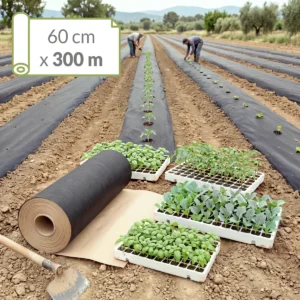 Novamulch Professional Paper 60 cm. x 300 m.49,93 € VAT included
 -
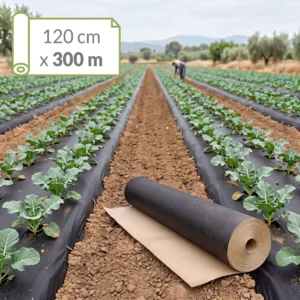 Novamulch Professional Paper 120 cm. x 300 m.99,86 € VAT included
 -
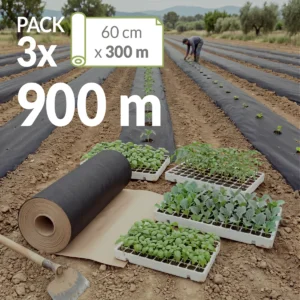 PACK of 3 rolls of Novamulch Professional paper 60 cm. x 300 m. (900 m)149,78 € VAT included
 -
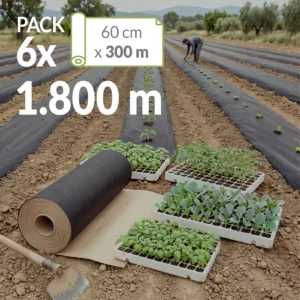 PACK of 6 rolls of Novamulch Professional paper 60 cm. x 300 m. (1.800 m)299,15 € VAT included
 -
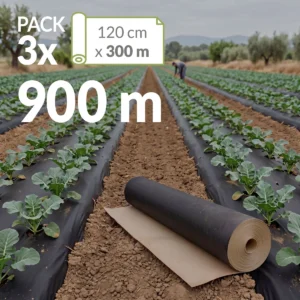 PACK of 3 rolls of Novamulch Professional paper 120 cm. x 300 m. (900 m)299,15 € VAT included
 -
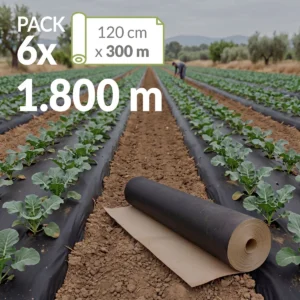 PACK of 6 rolls of Novamulch Professional paper 120 cm. x 300 m. (1.800 m)599,20 € VAT included
Contact and support
For any questions or queries you can contact us through the web CHAT, by email or by phone. We will be happy to assist you.